One day your cat is jumping onto the couch like usual, and the next they are hesitating, holding up a paw, or moving with a stiff, uneven gait. If you are asking, why is my cat limping, you are not overreacting. Limping is a sign that something hurts, and while some causes are minor, others need prompt veterinary attention.
Cats are experts at hiding discomfort. By the time a limp is obvious, there may already be inflammation, an injury, or an underlying medical issue affecting the leg, paw, joint, spine, or even the nerves. The challenge is that limping can look similar from one cat to another, even when the causes are very different.
Why is my cat limping all of a sudden?
A sudden limp often points to pain, trauma, or irritation somewhere in the limb. That can mean something simple, like a torn nail or a small object stuck in the paw, but it can also mean a sprain, bite wound, fracture, or dislocation. In some cats, the problem is not in the leg itself. Back pain, nerve injury, or a blood clot can also change the way a cat walks.
The details matter. A cat who is limping but still eating, using the litter box, and resting comfortably may have a different level of urgency than a cat who cries when touched, refuses to bear weight, or seems weak and distressed. Even so, limping is never something to ignore for long.
Common reasons cats limp
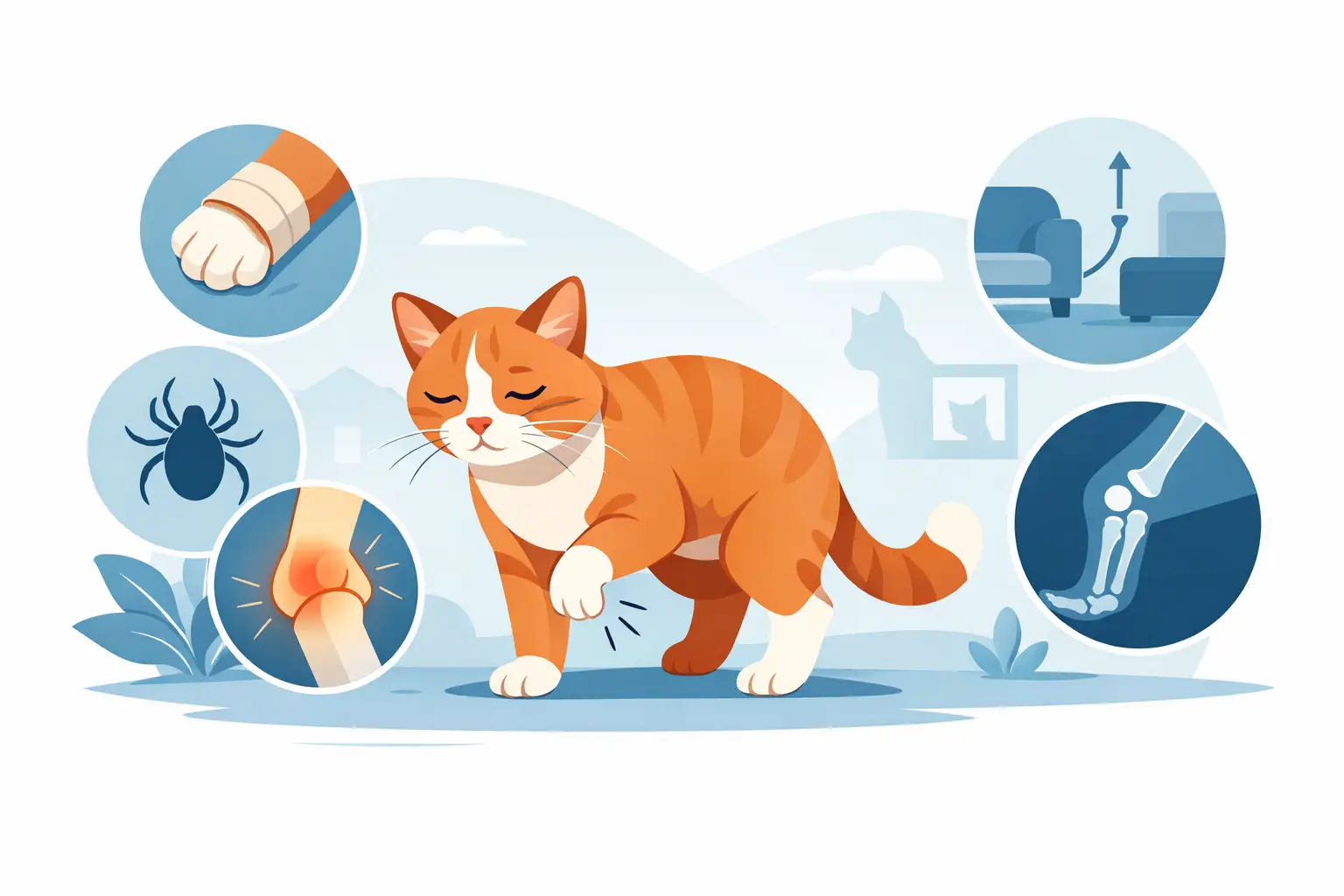
Paw injuries are one of the most overlooked causes. Cats can get cuts, burns from hot pavement or surfaces, splinters, insect stings, or foreign material lodged between the toes. A broken or torn nail can be surprisingly painful and may cause sudden limping, licking, or reluctance to walk.
Soft tissue injuries are also common. Just like people, cats can strain a muscle or sprain a ligament after a bad jump, rough play, or slipping on a hard floor. These injuries may improve with rest, but they can be difficult to tell apart from more serious damage without an exam.
Fractures and dislocations are more serious possibilities, especially after a fall, getting stepped on, or any outdoor trauma. Some cats will completely avoid putting weight on the limb. Others may still walk, but very carefully. Swelling, an unusual leg position, or obvious pain are signs to have your cat seen right away.
Bite wounds and abscesses are another common cause, particularly in cats that spend time outdoors. A puncture wound can be small and easy to miss, but infection under the skin can become painful quickly. You may notice swelling, warmth, lethargy, or a limp that seems to worsen over a day or two.
Arthritis is a frequent cause of limping in older cats, although it often appears more subtle than people expect. Instead of a dramatic limp, you might notice stiffness after resting, trouble jumping onto favorite surfaces, less grooming, or reduced activity. Cats with arthritis do not always limp every day, which can make the issue easy to dismiss.
In some cases, limping is linked to nail bed disease, infections, joint inflammation, or growths affecting the bone or soft tissue. Neurological conditions can also change gait and posture. If the weakness seems to involve more than one leg, or your cat is dragging a limb, the problem may be more complex than a simple leg injury.
What you can check at home
If your cat will tolerate it, watch them walk in a quiet room with good lighting. Try to identify which leg seems affected, but do not force movement. Gently look at the paws for cuts, swelling, bleeding, broken nails, or something caught between the toes.
You can also look for visible swelling higher up the leg, but avoid squeezing or bending the joints. Cats in pain may scratch or bite, even when they are normally gentle. If your cat is hiding, growling, breathing faster than usual, or resisting handling, it is better not to push the exam at home.
Do not give human pain medication. Drugs like ibuprofen, naproxen, and acetaminophen can be dangerous or toxic to cats. Keep your cat quiet indoors, limit jumping as much as possible, and call your veterinarian for guidance.
When a limping cat needs urgent care
Some cases should be seen the same day. That includes any cat who cannot bear weight on a leg, has obvious swelling or deformity, is crying out in pain, has a wound, or seems suddenly weak. A limp after trauma should also be evaluated promptly, even if your cat still seems fairly calm.
Loss of movement in a limb, dragging the back legs, or signs of distress such as open-mouth breathing, pale gums, or collapse are emergencies. These signs can point to severe injury or a circulation problem that needs immediate medical care.
If the limp is mild and your cat is otherwise acting normally, it is still wise to schedule an exam if it lasts more than a day or two. Cats rarely fake limping, and persistent changes in mobility usually mean something is wrong.
Why is my cat limping but not crying?
Many cats limp without vocalizing. Cats often hide pain as a survival instinct, which means a quiet cat can still be very uncomfortable. The absence of crying does not rule out a fracture, infection, arthritis, or other painful condition.
This is one reason veterinary exams are so important. Limping tells us there is a problem, but it does not tell us how severe it is. A calm appearance can be misleading, especially in cats that are naturally stoic.
How veterinarians find the cause
A thorough physical exam is the starting point. Your veterinarian will watch how your cat moves, feel along the leg and joints, examine the paws and nails, and check for swelling, wounds, heat, instability, or pain. They will also consider your cat’s age, lifestyle, health history, and whether the limp came on suddenly or gradually.
X-rays are often recommended when a fracture, dislocation, arthritis, or bone problem is suspected. In some cases, bloodwork may help identify infection, inflammation, or other underlying disease. If the cause appears more complex, advanced imaging or further orthopedic or neurologic evaluation may be needed.
This is where having access to broad in-house veterinary services can make a real difference. At a full-service hospital like All Creatures Veterinary Center, a limping cat can be evaluated with diagnostics, pain management, surgery if needed, and follow-up rehabilitation planning under one roof.
Treatment depends on the cause
There is no single treatment for limping because the right approach depends on what is actually wrong. A torn nail may need cleaning, trimming, and pain relief. An abscess may need drainage and antibiotics. A sprain may respond to rest and anti-inflammatory medication, while a fracture may require splinting or surgery.
Arthritis often calls for long-term management rather than a one-time fix. That may include weight support, joint-friendly pain control, mobility aids at home, and in some cases rehabilitation or regenerative therapies. The goal is not only to reduce pain, but also to preserve function and quality of life.
The trade-off is that waiting too long can make treatment more complicated. A small wound can become a deeper infection. Mild limping from joint disease can turn into chronic pain and muscle loss. Early diagnosis usually gives you more options and can spare your cat unnecessary discomfort.
Helping your cat stay comfortable at home
Until your appointment, keep your cat indoors and encourage rest. Set up food, water, and the litter box nearby so they do not need to climb stairs or jump. If they usually sleep up high, create a quiet ground-level space with soft bedding.
Try to limit rough play and interactions with other pets if your cat seems irritable or guarded. If you need to transport them, use a secure carrier and line it with a towel or blanket for traction and comfort.
A limp is your cat’s way of asking for help
Even when it seems mild, limping deserves attention because cats tend to hide pain until they cannot hide it well anymore. If your cat is moving differently, favoring a leg, or avoiding normal activity, trust what you are seeing and have them checked. A timely exam can bring answers, relief, and the peace of mind that comes from knowing your cat is getting the care they need.