Calcaneal Tendon Injury in Pets: Signs, Causes & Treatment Explained – A calcaneal tendon injury, which is sometimes also referred to as a common calcaneal tendon injury or Achilles tendon injury, is a very serious orthopedic problem seen in dogs and sometimes in cats. The calcaneal tendon connects the major calf muscles of the hind leg to the heel bone (calcaneus). The calcaneal tendon plays a critical role in maintaining normal gait, and when the calcaneal tendon becomes damaged, the pet may no longer be able to stand or bear weight on the injured leg.
As a pet owner, understanding the signs, causes, and treatment options, as well as the available treatment options, is the first step in ensuring that your pet receives the appropriate medical care for this serious injury.
What Is the Calcaneal Tendon?
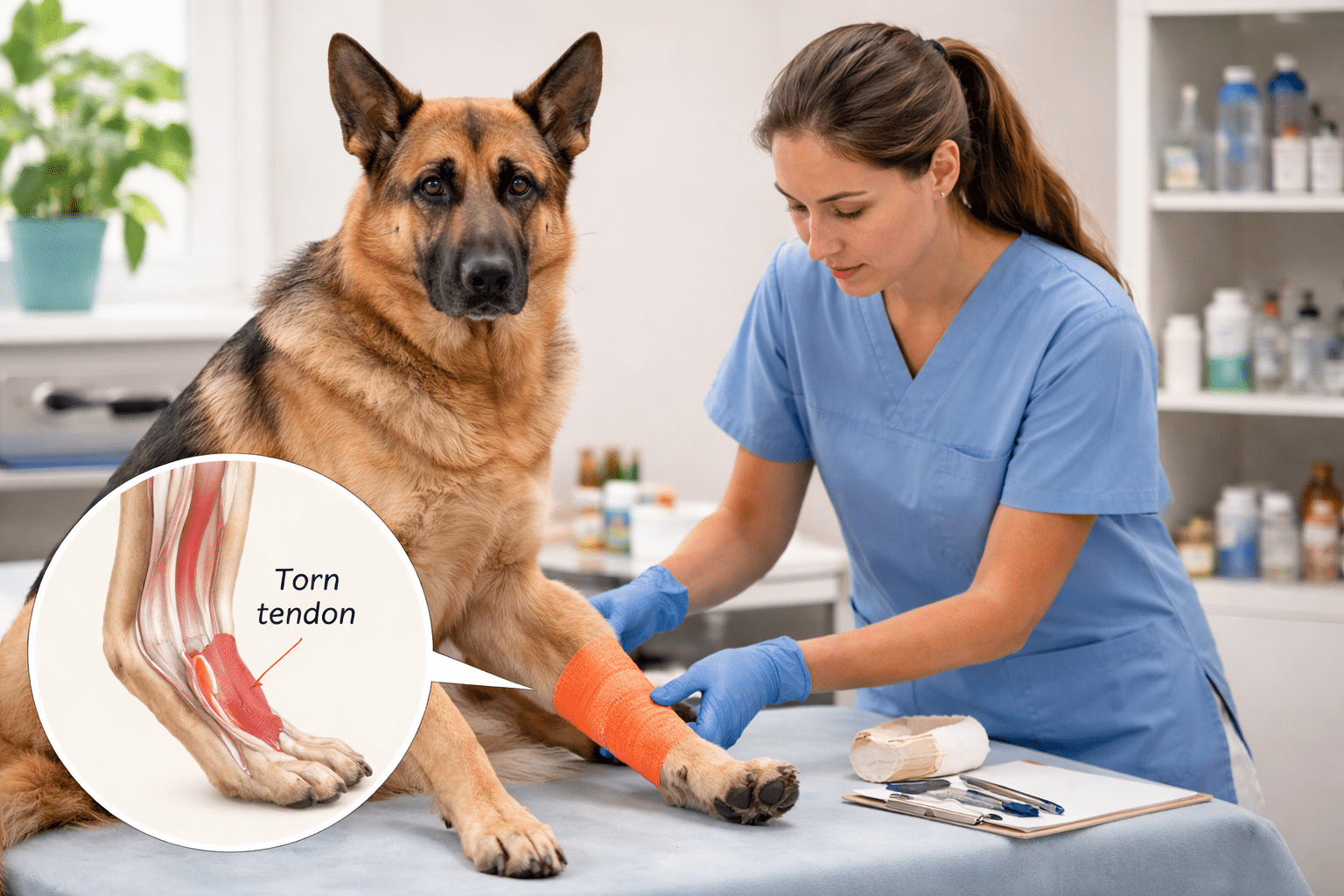
The calcaneal tendon, also called the Achilles tendon, is made up of several tendons that connect different muscles to the heel bone. All of these tendons work together to enable the hind leg to extend at the hock joint, which is essential to both walking and running.
A portion of the calcaneal tendon can become partially ruptured or stretched beyond its normal capacity, which will affect the biomechanics of a dog’s or cat’s hind leg and cause significant mobility issues.
“Detecting and treating a calcaneal tendon injury early provides the best opportunity to prevent permanent mobility problems.”
Signs of Calcaneal Tendon Injury in Pets
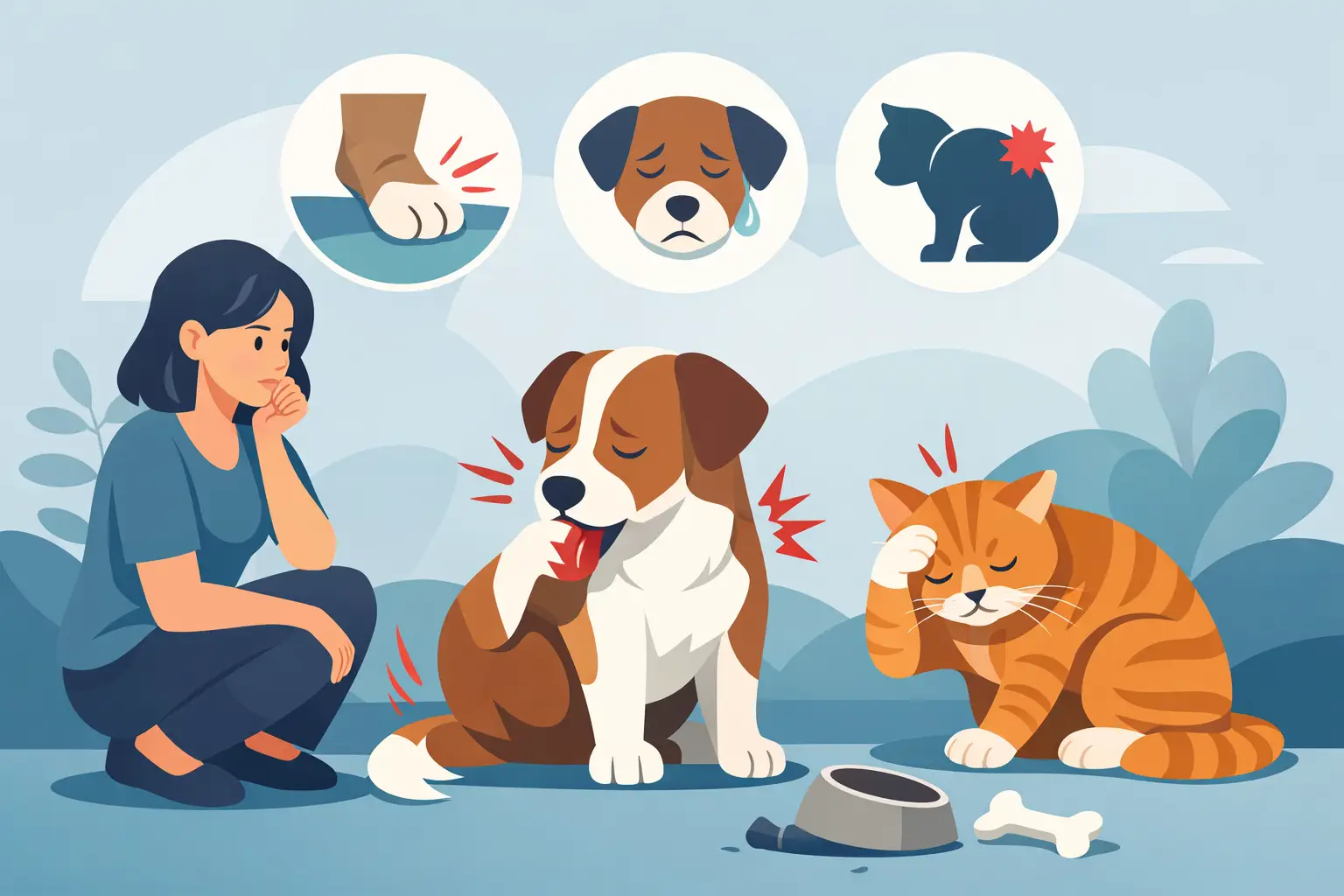
Common symptoms of a calcaneal tendon injury in dogs and cats are readily apparent. Your pet may walk with a limp on their back leg, or perhaps they’ve stopped putting weight on it altogether; both may indicate a calcaneal tendon injury (often referred to as a “dropped hock”), where the pet walks flat-footed, or down on their ankle. You may also see swelling, bruising, or discoloration on the back of your pet’s leg. If you notice your pet limping, hesitating to stand, struggling to climb stairs, or showing pain or tenderness around their ankle, or if they exhibit swelling around either their hock or heel, please seek veterinary care immediately. By treating these injuries at an early stage, you may improve the prognosis for your pet with this type of injury.
To confirm the diagnosis, veterinarians perform a complete physical and orthopedic examination along with diagnostic imaging (X-rays or ultrasound) to image both the calcaneal tendon and the size of any tear.
Other symptoms you may see include:
- A sudden onset of lameness in the back leg
- Difficulty getting up off the floor and/or climbing stairs
- Pain and/or tenderness around the ankle area
- Swelling near the heel or hock
- Decreased activity or reluctance to move
If your pet suddenly starts to show any one of these symptoms, you will want to have your pet evaluated by a veterinarian immediately.
Causes of Calcaneal Tendon Injury in Dogs and Cats
There are several reasons why a calcaneal tendon injury could happen to your pet; injuries may occur due to trauma, degenerative changes, or repetitive stress over time.
Common causes include:
- Trauma or Injury
Tendon ruptures can be caused by sudden accidents such as falling, jumping, or getting caught in a fence.
- Overuse
Active dogs competing in sports, performing agility work, or exercising at a high level may overuse their tendons.
- Degenerative Tendon Disease
Age-related changes can weaken the tendon and increase the risk of injury.
- Chronic Conditions
Certain medical conditions, including diabetes and long-term steroid use, can increase the risk of tendon injury.
- Lacerations or Cuts
If a dog suffers a deep laceration on the back of the leg, it may completely sever the tendon.
Veterinarians will evaluate the causative factors to determine the most effective treatments.
Diagnosis of Calcaneal Tendon Injuries
Diagnosing calcaneal tendon injuries typically involves a physical examination and diagnostic imaging by a veterinarian.
A veterinarian will generally perform:
- Orthopedic examination
- Palpation of the tendon
- X-rays to determine if there is any bone involvement
- Ultrasound imaging to determine the extent of tendon damage
- Sometimes, MRI scans for more complicated cases
When using these different diagnostic tools, a veterinarian will determine whether the injury is partial or complete, which will guide the veterinarian’s choice of treatment.
Treatment Options for Calcaneal Tendon Injuries
Surgical options offer the best recovery chance for moderate to severe injuries, so if your pet has an injury resulting from torn or ruptured tendons, their prognosis may be improved through surgical intervention. If your veterinarian recommends surgical repair, your pet will have their ruptured ligament reattached using sutures, and then will have a splint or external fixator placed around the joint for support while healing occurs. For mild to partial ruptures, your veterinarian may choose to treat your pet non-surgically, using strict rest and a splint or cast to stabilize the joint, while closely monitoring the healing process. However, regardless of which method was chosen. Recovery requires time, patience, and strict adherence to the treatment plan. A full recovery typically takes 12 to 16 weeks and includes an appropriate physical therapy exercise program to gradually restore function.
Surgical Treatment
- The tendon is completely ruptured
- There is significant joint instability
- Non-surgical treatment has failed
The purpose of surgery is to reattach and support the completion of the rupture while providing stabilization until full recovery occurs.
Non-Surgical Treatment
If there is a possibility of your pet’s injury falling under “minor injuries”, your veterinarian may recommend:
- Rest and limited activity
- Splint or cast
- Anti-inflammatory medications
- Physical rehabilitation therapy
Your veterinarian will determine the appropriate follow-up care based on your pet’s specific condition. Monitoring your pet closely for signs of improper healing is essential for a successful recovery for both surgical and non-surgical methods!
Recovery and Rehabilitation for a Calcaneal Tendon Injury in Pets
Recovery from a calcaneal (Achilles) tendon injury requires patience and careful supervision to heal properly.
There are some common steps that most pets will follow during their recovery:
- Following a restricted activity period (several weeks)
- The use of splints or bandages to protect the injury site
- Multiple veterinary follow-ups to monitor healing progress
- An ongoing physical therapy program intended to gradually increase physical activity
- A controlled return to normal activities
Depending on several factors (i.e., severity of injury, type of treatment), your pet may take three to four months to fully recover.
It is critical that you closely follow your veterinarian’s instructions during this time to prevent your pet from re-injury.
Conclusion
A calcaneal tendon injury in pets, if not treated appropriately and quickly, can significantly affect your pet’s mobility and overall quality of life. Early recognition of signs of a problem with your pet’s tendon, followed by prompt veterinary intervention, can greatly improve the outcome of your pet’s recovery from a calcaneal tendon injury.
Once your pet has received a diagnosis from the veterinarian, once a treatment plan has been developed with your veterinarian, and a strict commitment to the rehabilitation process, many pets will regain their full strength and be able to resume their usual activities. It is always a good idea to consult with a qualified veterinarian to ensure your furry friend receives the best care possible for their long-term health.
FAQ
What do you call an injury to the calcaneal tendon in pets?
A calcaneal tendon injury occurs when the tendon that attaches the calf muscle to the heel bone has either stretched too much, torn completely, or ruptured (broken), and typically, there is some amount of pain and limited ability of the pet to walk.
What are the causes of calcaneal tendon injury in dogs?
Typical causes include trauma, excessive activity or overuse of the tendons, degenerative disease of the tendons, or deep lacerations on the back leg.
Can dogs that have sustained a calcaneal tendon injury recover without surgery?
Dogs with mild injuries or partial tears may require complete rest, with strict adherence to restricted activity, a splint or brace to immobilize the hind leg to promote healing, and veterinarians will supervise their care. Dogs that have complete tears of the tendon often require surgery to repair the tendon.
How long does it generally take dogs to recover from a calcaneal tendon injury?
Most dogs will take 12 to 16 weeks to heal completely; however, some dogs will be able to return to normal activity within a few days or weeks, whereas other dogs will take much longer to fully recover.
What are the earliest signs of calcaneal tendon injury?
Limping, swelling around the ankle joint (hock), and dogs that develop a dropped hock (dogs that are walking with their foot flat on the ground).