A dog who wakes up limping, a cat who suddenly refuses dinner, or a puppy with repeated vomiting can make a normal day feel frightening very quickly. Understanding pet urgent care vs emergency care can help you act promptly without the added stress of guessing where your pet should be seen.
The distinction is not always perfectly clear, and you do not need to diagnose your pet at home. Your role is to notice what has changed, assess whether your pet is stable, and call for guidance. A trusted veterinary team can help you decide whether your pet needs a same-day exam, immediate emergency treatment, or careful monitoring at home.
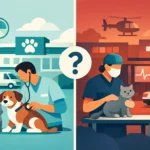
Pet Urgent Care vs Emergency: The Key Difference
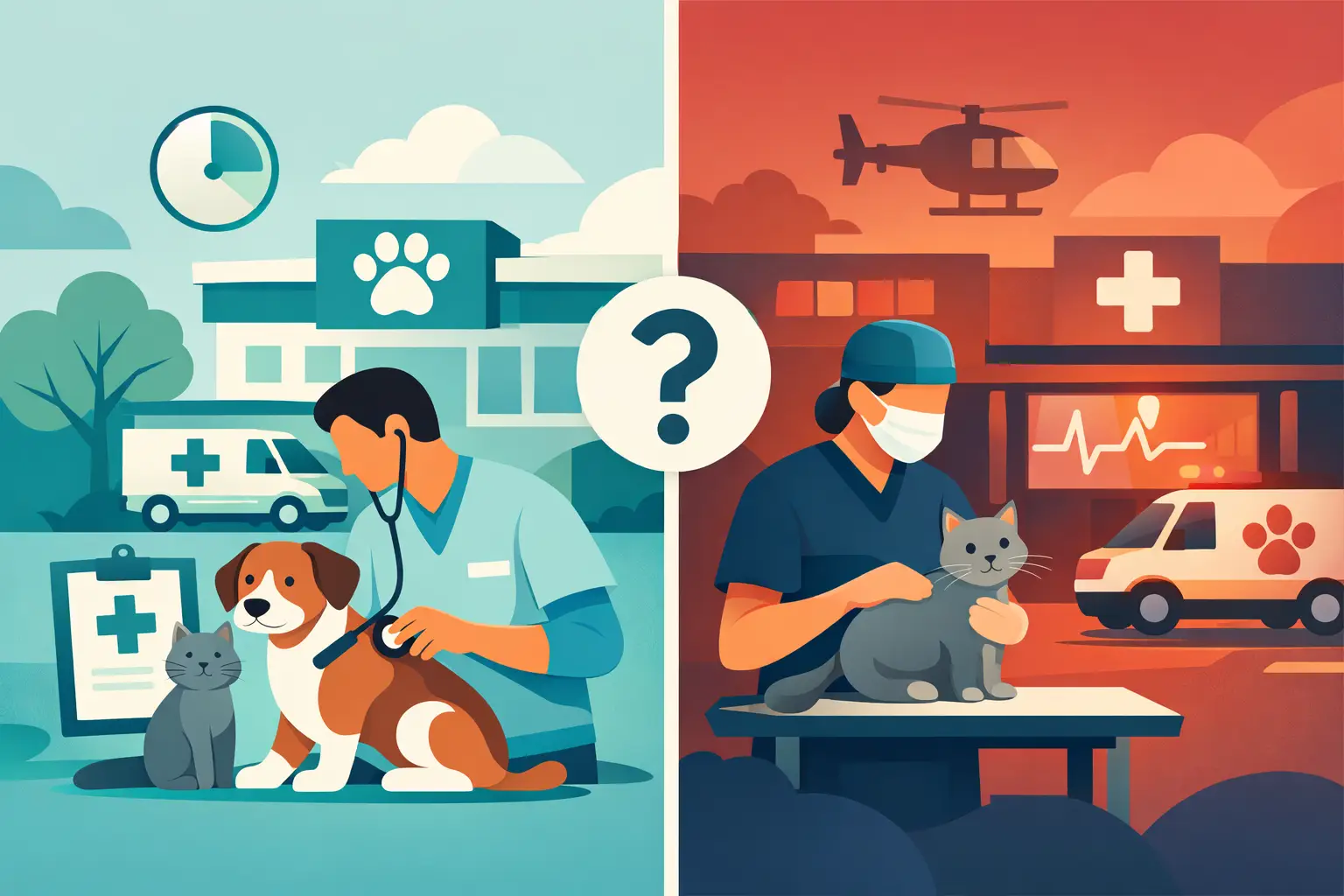
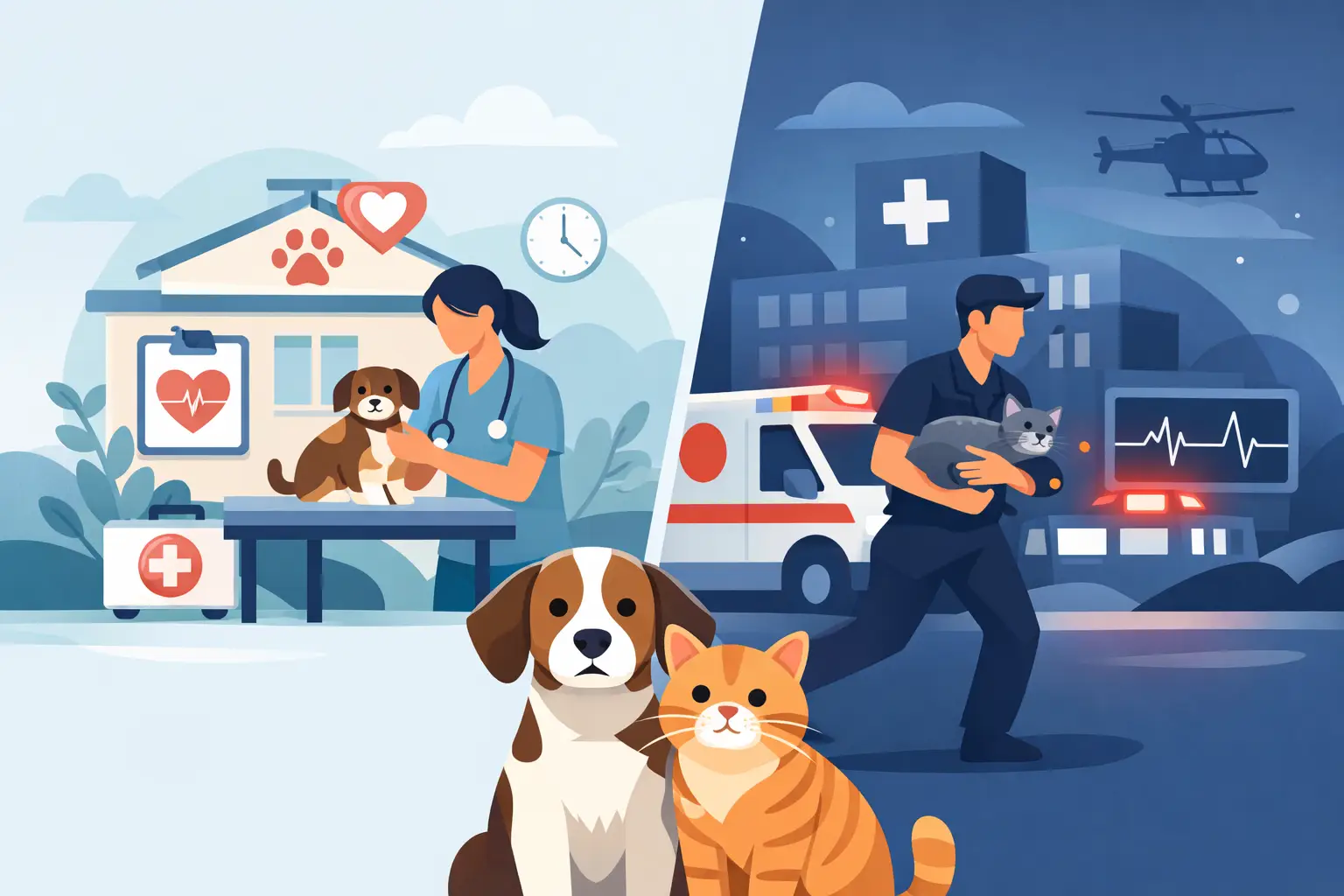
Urgent care is for health concerns that need timely veterinary attention but are not immediately life-threatening. Your pet may be uncomfortable, ill, or at risk of worsening without treatment, yet they are breathing normally, responsive, and reasonably stable. These visits often happen during regular hospital hours and may include an exam, bloodwork, X-rays, ultrasound, medication, wound care, or a treatment plan for follow-up.
Emergency care is for conditions where delaying treatment could threaten your pet’s life, cause permanent harm, or lead to severe pain. Emergency hospitals are equipped for around-the-clock triage, stabilization, intensive monitoring, and critical interventions. If your pet appears to be in immediate danger, go to the nearest emergency veterinary hospital rather than waiting for a routine or same-day appointment.
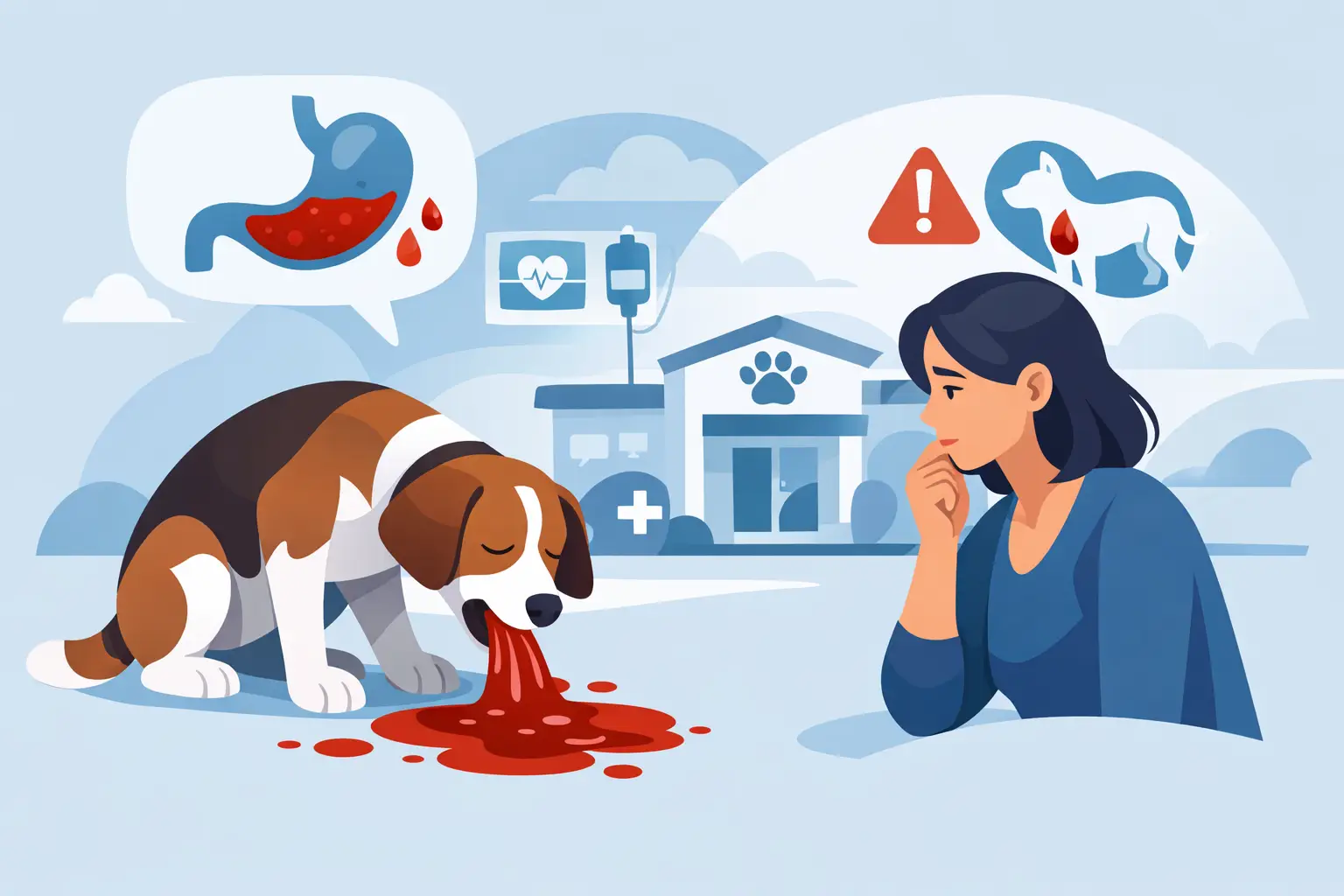
The categories can overlap. For example, vomiting once in an otherwise bright, comfortable dog may be a concern to monitor. Vomiting several times with a swollen abdomen, weakness, or repeated attempts to retch can be an emergency. The difference is often the severity of the signs, how quickly they developed, and whether your pet is declining.
When a Same-Day Urgent Visit May Be Appropriate
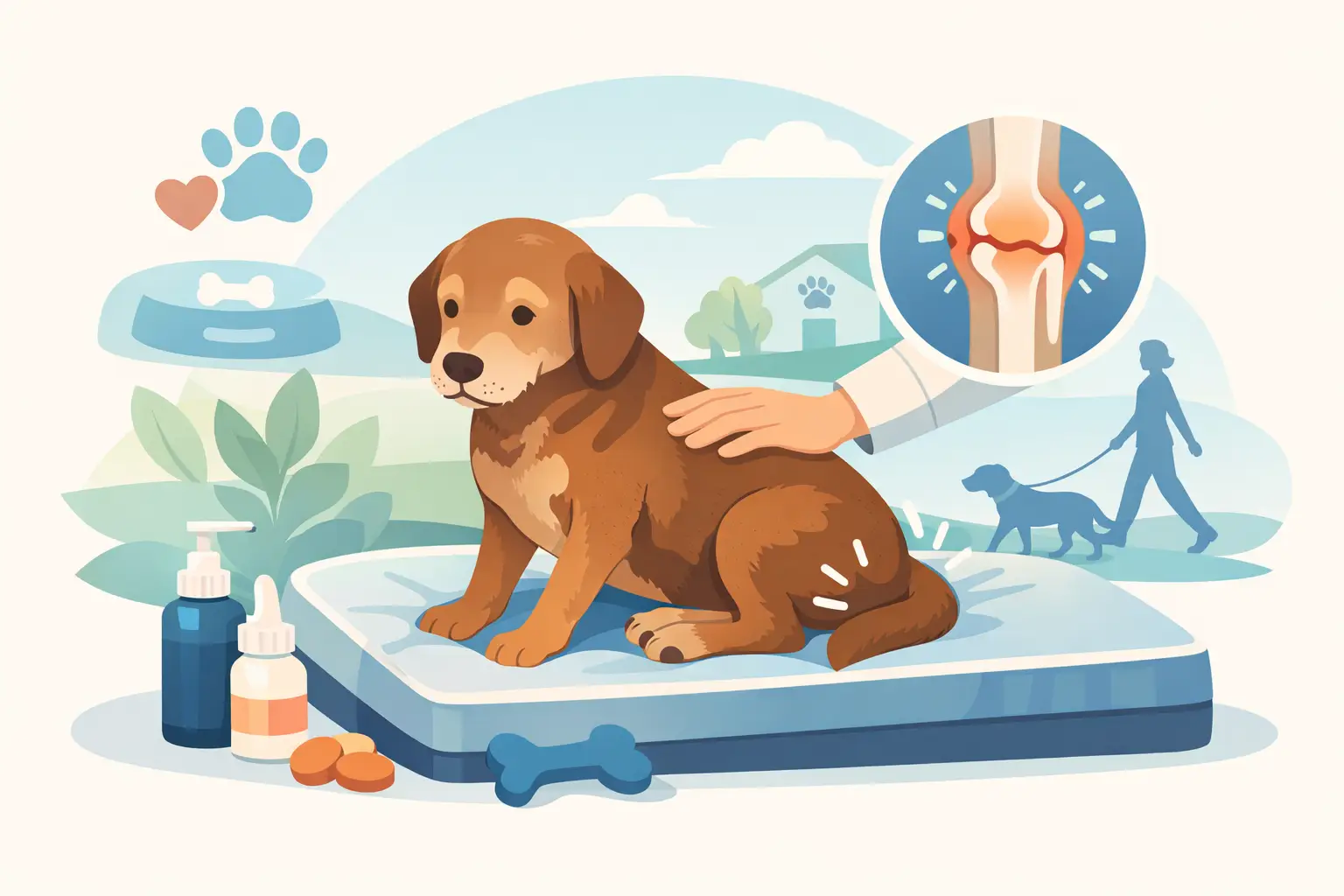
A same-day veterinary visit is often the right choice when your pet needs care soon but is alert and stable. Common reasons include a new limp, mild to moderate diarrhea, an ear infection, a small skin wound, eye redness without obvious trauma, itching or a rash, or reduced appetite lasting longer than a meal or two.
Other urgent concerns include coughing, sneezing with nasal discharge, scooting, painful urination when your pet is still producing urine, broken nails, and possible ingestion of a non-toxic item. A senior pet who suddenly seems more stiff, quiet, or reluctant to use the stairs also deserves a timely assessment. Pain and subtle behavior changes can be early signs of arthritis, dental disease, internal illness, or neurologic problems.
Call before arriving whenever possible. The team can ask about your pet’s symptoms, age, medical history, and current medications. They may recommend bringing a stool sample, taking a short video of the episode you observed, withholding food for a period before imaging, or going directly to an emergency hospital instead.
At All Creatures Veterinary Center, same-day concerns during business hours can be assessed with the benefit of a team that already knows many local pets and their medical histories. Access to in-house diagnostics and individualized treatment planning can make a meaningful difference when a problem needs quick answers.
Signs Your Pet Needs Emergency Care Now
Do not wait for an urgent appointment if your cat or dog has signs of a life-threatening emergency. Call an emergency veterinary hospital while you are on the way if you can do so safely. Seek immediate help for:
- Trouble breathing, blue or pale gums, choking, or severe coughing with distress
- Collapse, loss of consciousness, profound weakness, or a seizure that lasts more than a few minutes or repeats
- A swollen, hard, or painful abdomen, especially with unproductive retching or sudden restlessness
- Uncontrolled bleeding, major trauma, suspected broken bones, or wounds from an animal attack
- Inability to urinate, particularly in a male cat, or straining with little to no urine produced
- Heatstroke, drowning, electrocution, known toxin exposure, or ingestion of a foreign object that could cause a blockage
- Severe eye injury, sudden blindness, or an eye that appears swollen, protruding, or intensely painful
These signs can worsen rapidly, even if your pet seems to rally for a few minutes. A pet that is hiding, unable to stand, crying out, or acting unlike themselves after an accident should be treated as an emergency. Cats, in particular, often mask illness until they are quite sick.
How to Make the Call When Symptoms Are Unclear
Many pet health concerns fall between clearly minor and clearly critical. In those moments, focus on the information a veterinary professional needs most: what happened, when it began, whether the signs are getting worse, and how your pet is behaving right now.
Check your pet’s breathing from a distance. Labored breathing, open-mouth breathing in a cat, exaggerated chest movement, or persistent panting in a cool, quiet room are concerning. Look at the gums if your pet allows it. Healthy gums are usually moist and pink, though normal pigment varies. Pale, gray, blue, or very bright red gums warrant urgent guidance.
Also consider eating, drinking, urination, bowel movements, mobility, and mental awareness. A pet who will not eat may need prompt attention, but a pet who will not eat and is also vomiting, weak, or painful needs more urgent evaluation. A small cut may be manageable, while a bite wound or cut that will not stop bleeding is not.
When you call, be direct about any possible toxin, medication, food, object, fall, fight, or injury involved. Bring packaging, medication containers, or a photo of the substance if relevant. Do not induce vomiting or give human pain medication unless a veterinarian specifically tells you to. Medications such as ibuprofen, acetaminophen, naproxen, and many cold medicines can be dangerous for pets.
Why Continuity of Care Helps in Urgent Situations
A relationship with a full-service veterinary hospital is valuable long before an urgent problem happens. Your pet’s baseline weight, prior bloodwork, medications, allergies, chronic conditions, and past imaging can all guide faster decisions. A dog with a known heart condition or a cat with chronic kidney disease may need a different approach than an otherwise healthy young pet with the same outward symptom.
Continuity also helps after the immediate problem is addressed. Some pets need rechecks, pain management, rehabilitation, dental treatment, surgery, or ongoing monitoring. Having one team coordinate preventive care and follow-up care can reduce confusion and help your family feel supported at every stage.
Still, the nearest emergency hospital is the right choice when your pet is unstable or needs care outside your regular veterinarian’s hours. The goal is never to wait for a familiar setting when minutes matter. Once your pet is stable, your regular veterinary team can work with you on next steps and long-term care.
Prepare Before You Need to Decide
Keep your regular veterinary hospital’s phone number and the closest 24-hour emergency hospital’s information saved in your phone. Know the safest route to each location. A basic pet first-aid kit, a secure carrier for cats, and a leash or transport harness for dogs can prevent frantic searching during an already stressful moment.
It also helps to keep a current list of medications, medical conditions, and your pet’s normal behaviors. If your pet has a chronic illness, ask your veterinarian which changes should trigger a same-day call and which require emergency care. Clear guidance gives you a practical plan instead of forcing you to make every decision from scratch.
When your instincts tell you something is wrong, trust that observation and call. You know your pet’s usual habits better than anyone, and a timely conversation with a veterinary professional can bring the clarity and reassurance your family needs.