If you have watched your dog limping around the house or seen your cat not eating recently, you probably understand the unique feeling of uncertainty that comes with it. Should I take him/her in now or wait till Monday? This is one of the hardest things for us as pet parents to deal with. We don’t want to overreact but at the same time, we don’t want to wait until too late and lose our fur babies. Vet Urgent Care fills that gap. Vet Urgent Care is located between routine care (like well checks) and emergency services (e.g. ER). Knowing the difference may very well save your pet’s life.
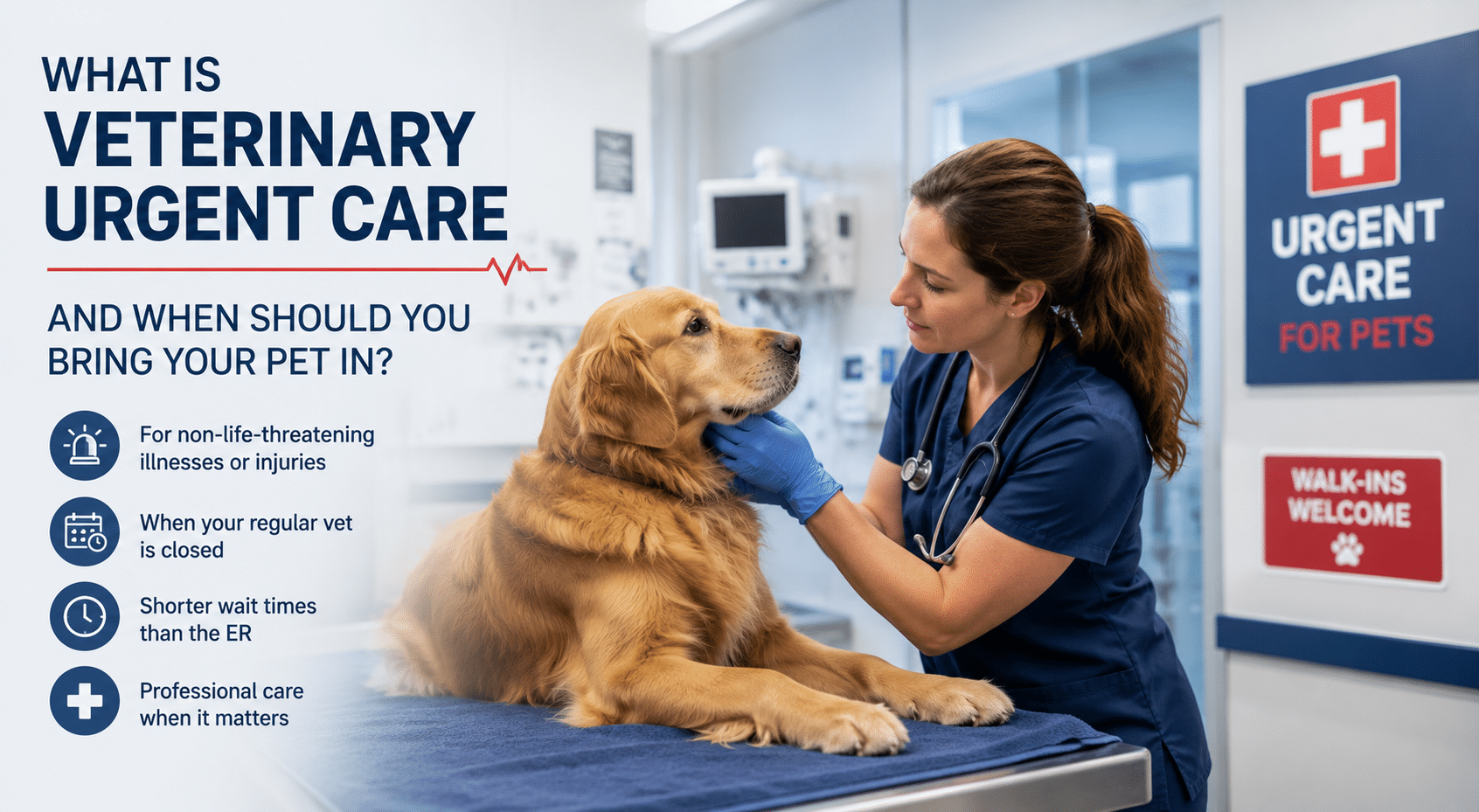
So here in this blog, we give you proper information about what veterinary urgent care is and when you should bring your pet in.
So, What Exactly Is Veterinary Urgent Care?
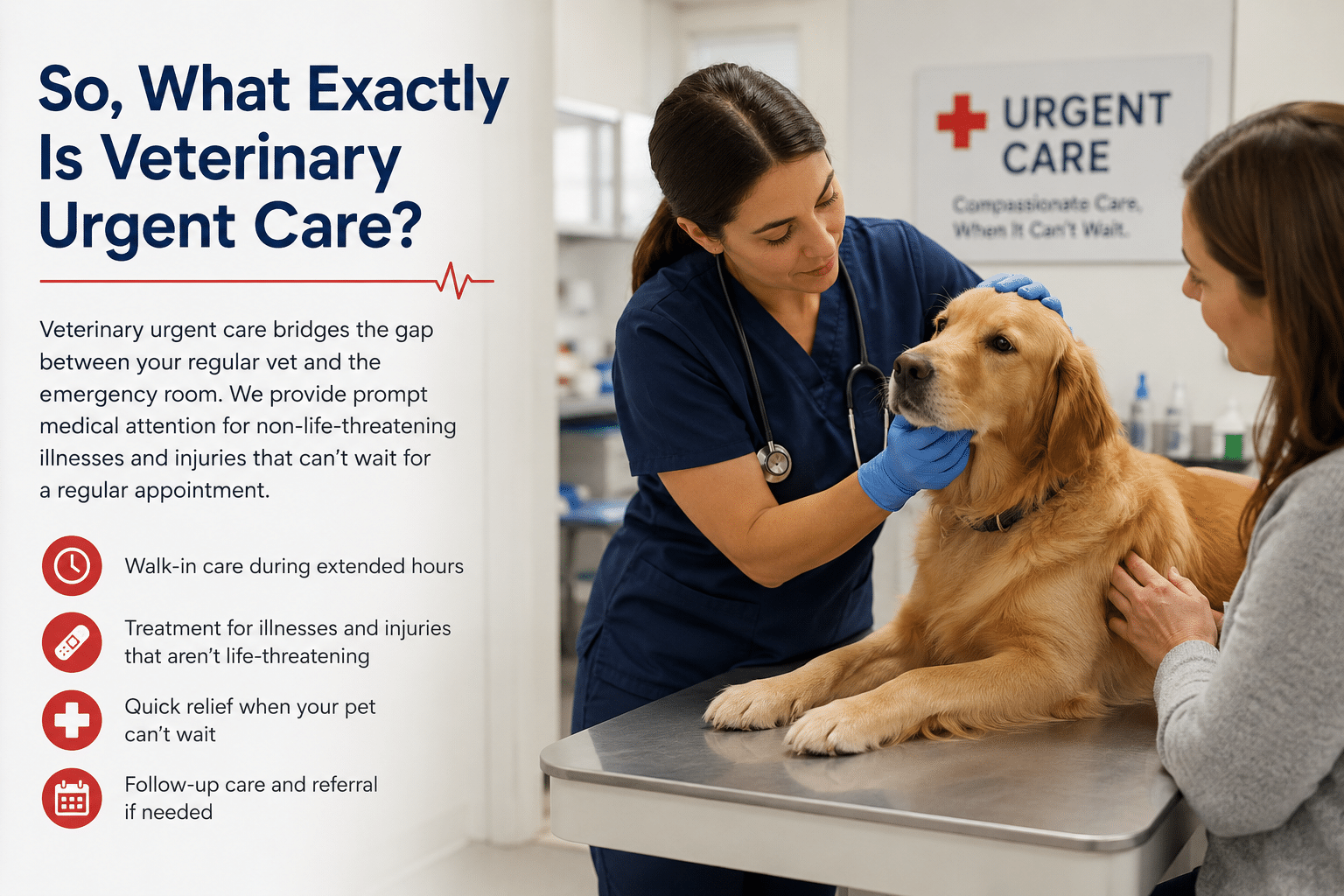
Urgent care for animals treated on the same day or the next day is still a more serious condition than simply waiting for a scheduled appointment but it is not life threatening either. Urgent care can be considered to be in between a routine appointment and a trauma emergency where every second counts.
Yes, urgent care covers cases that require immediate attention such as limping, eye irritation, small cuts, vomiting, diarrhea, skin issues, and other recently developed conditions that are causing your animal discomfort. These conditions require an experienced veterinarian to examine them on the day of presentation, and definitely before the next open appointment in your veterinarian’s schedule.
Urgent Care vs. Emergency Care: What’s the Difference?
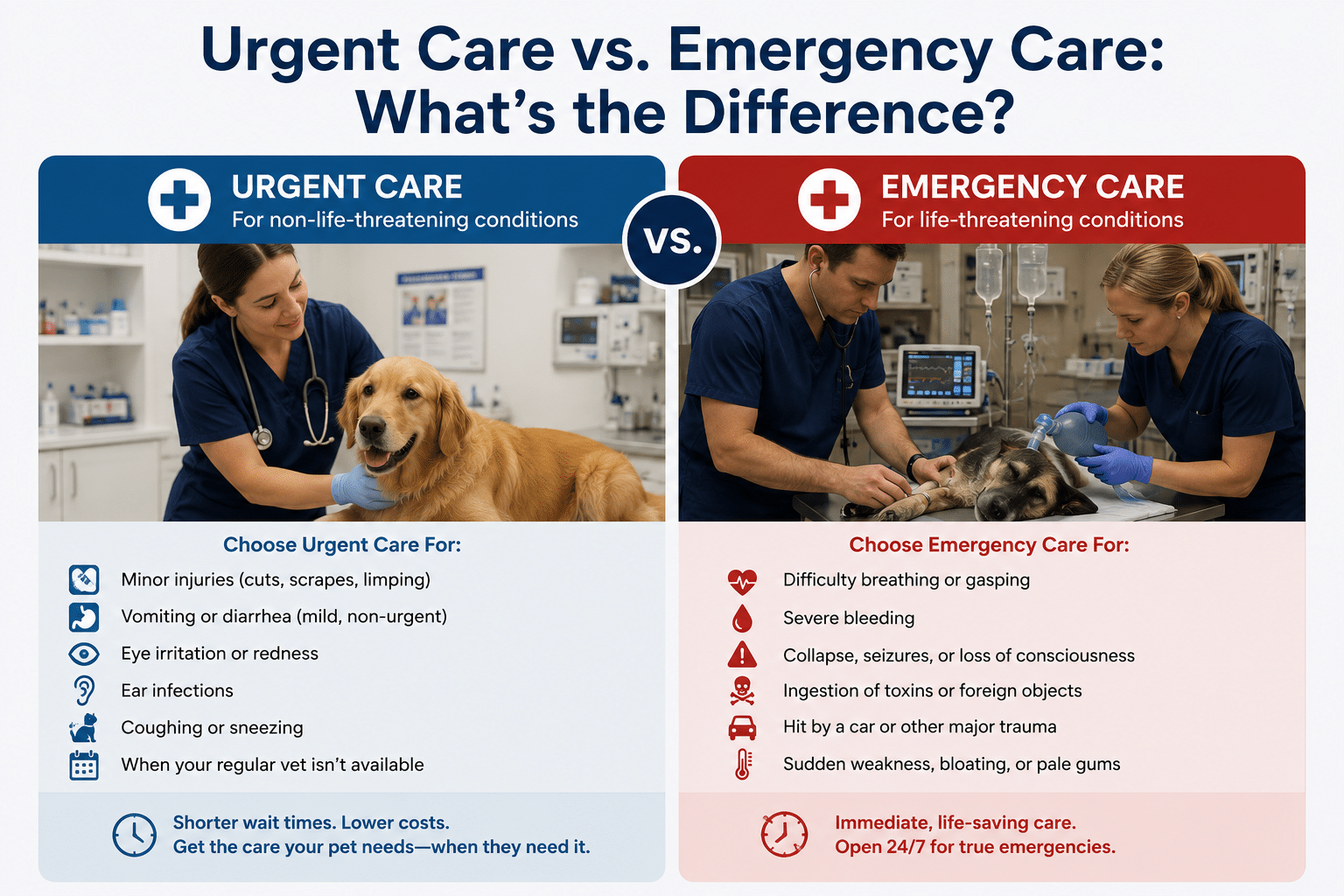
“Here is where many pet parents become confused, so let’s clarify this as simply as possible.
- Veterinary urgent care should be used when your pet is sick or uncomfortable but still stable — i.e., breathing normally, conscious and not in obvious severe distress.
- Emergency care is needed when your pet’s life might be at risk right away — loss of consciousness, seizures, severe trauma from an accident, suspected poisoning, difficulty breathing or uncontrolled bleeding are all examples of when emergency care would be required.
By understanding these distinctions, it should make it easier to make quicker decisions and, therefore, to obtain the right level of care for your pet in a timely manner.”
Signs You Should Bring Your Pet In for Urgent Care
Examples of when your pet requires immediate (not routine) evaluation by a veterinarian include:
- Digestive Issues — If your pet has vomited more than twice during a 24 hour period or had diarrhea more than twice during a 24 hour period, these are emergencies and should be seen by your veterinarian as soon as possible, especially if any of the vomiting or diarrhea contains blood. Many dogs and cats will have upset stomachs from time to time and this is typically not a serious problem, but both frequent vomiting and diarrhea can lead to severe dehydration.
- Limping or Sudden Lameness — If your pet is seen with any of the following symptoms—favoring a limb, being unwilling to place weight on a limb, or vocalizing in pain when touched or held by you—this is a situation that should be evaluated immediately as it may be indicative of a sprain, fracture or other joint-related problems that need attention before they worsen.
- Eye or Ear Problems — Redness, discharge, squinting, or scratching at their face or ears can indicate pain requiring an emergency visit. If not taken care of, eye conditions can worsen significantly in a short amount of time.
- Minor Wounds or Lacerations — An animal with minor wounds may need a work-up to rule out infection. Certain small wounds may still need attention, such as bleeding or puncture wounds from another animal.
- Urinary Straining — If your pet is trying to urinate often but doesn’t succeed, or they show distress while trying to use the litter box (especially if it’s not producing any urine), they need immediate veterinary care – particularly if it’s a cat, as urinary blockages can put them at risk for death within a short period of time.
- Lethargy Combined with Other Symptoms — A pet that is more tired than normal, is not eating and/or has some type of extenuating symptom (e.g., vomiting, limping, having difficulty breathing) needs veterinary care on the same day rather than just waiting.
- Mild Allergic Reactions — Pets that suddenly develop swelling of the face, hives or itching without reason after receiving a vaccine, changing to a new food or after being outside should see a veterinarian as soon as possible to prevent an escalation of their symptoms.
When NOT to Wait: Red Flag Symptoms That Need Emergency Care
You should visit an ER (Emergency Room) or Medevac, bypassing urgent care, if you observe any of the following signs:
- Collapsing, falling down; not able to stand up without help.
- Seizures or uncontrollable shaking.
- Suspected ingestion of toxins or foreign bodies.
- Gums appear white, pale (or blue tinted).
- Severe difficulty breathing.
- Distended abdomen with excessive pain.
- Excessive bleeding.
If any of the above signs occur, visit a Medevac or ER without going through an Urgent Care.
Why Prompt Care Always Wins
Many pet owners hold back from acting because they’re concerned about appearing dramatic or spending too much money. However, it’s important to understand that even seemingly minor conditions can develop rapidly in pets. Because animals can be very good at hiding their pain and discomfort, by the time the symptoms are visible, the condition may be very advanced and will create a longer course of treatment, a higher cost for treatment, and potentially a less satisfactory outcome for the pet. Acting sooner generally results in a quicker recovery, lower costs, and better outcomes for your pet.
Conclusion
The value of the instincts you possess as a pet parent is important. When you feel something is not right with your pet, even if you’re unable to explain why, you can trust that feeling and have them seen by a veterinarian. Urgent veterinary care exists for those situations where waiting is not the appropriate thing to do.
All Creatures Veterinary Center in Newhall, CA has the ability to handle urgent as well as routine veterinary care; therefore, they perform both of these types of service under one roof. The medical team at All Creatures offers various types of services including diagnostic tests and procedures, surgical procedures on soft tissue, routine or emergency and trauma assistance, and they treat each pet with the same care that they would give to their own. If you are concerned about any signs and symptoms that your pet may be experiencing, do not wait; call (661) 291-1124 or schedule an appointment today.
FAQs
Q1. How do I know if my pet needs urgent care or if I can just wait for a regular appointment?
This is the kind of scenario that most pet owners worry about! It’s important to note that if your pet seems to be in obvious pain, suddenly develops a symptom(s), or just does not seem right to you after several hours have passed, then you should go ahead and get your pet to the vet! Some examples of symptoms that require same day veterinary attention are ongoing vomiting/diarrhea, limping, problems with the eyes, having difficulty urinating, etc. If you are uncertain as to whether or not your pet should be seen by a veterinarian, it’s always helpful to call your veterinarian and ask!
Q2. My pet seems a little under the weather, but is still eating and drinking. Should I still bring them in?
In most cases the answer is, if they are alert, responding appropriately and their overall behaviour has changed slightly in severity, you may want to monitor them at home for 2 to 4 hours; however, if they are eating significantly less than normal, appear to be quieter than normal or are exhibiting any other clinical signs associated with lethargy (eg coughing, vomiting, etc), then you will need to take them to a vet. Animals are very good at hiding pain/deprivation and therefore many illnesses take time before they appear fully developed and externally visible.
Q3. What’s the difference between urgent care and an emergency? I always get confused.
In summary, urgent care would be used when you realize your pet has a Pre-existing condition and that your pet seems stable, i.e., can breathe normally, is conscious and not experiencing extreme distress. Emergency care on the other hand would be used when your pet is having a life-threatening incident and needs to get to the vet’s office for emergency medical care. Examples of life-threatening incidents include Collapse (passed out), Seizures, Suspected Poisoning, and Uncontrolled Blood Loss. If you are experiencing any of the examples of life-threatening incidents, don’t bother calling first, go to the veterinarian’s office immediately!
Q4. My cat is straining in the litter box. Is that really that serious?
Yes, male cats are particularly vulnerable to urinary obstruction and blockages which can quickly become life threatening! If your cat is going into the litter box repeatedly and produces very little or no urine, appears to be crying out while in the litter box, or is licking the lower part of their abdomen excessively, please seek immediate veterinary care. Hours can make a difference in the success of treatment!