Let us be very honest, as parents we have all had those late-night moments where we stare. As a pet owner, you have experienced those late-night moments looking at your four-legged family members and wondering if that strange cough or becoming very lethargic is a situation where you should “wait until tomorrow” or “call 911”. This dilemma has been faced by all pet owners at one time or another; it is an emotionally charged experience that we all go through as responsible pet parents. Thus, this is why I spent so much time writing this article about Understanding the Differences between Emergency vs. Routine Vet Visits: What to Expect On The Cost, Timing and Choice of The Appointment Time (time to bring your pet to an emergency vet; time to go to “your” regular veterinary practice) so that you would have a better understanding of how to ensure your pet receives the best treatment possible, without having any undue panic over their health, by providing you with specific definitions of the criteria/conditions that would be considered a “red flag”, how much a visit will typically cost and what type of appointment will be appropriate for the condition your pet is in.
Timing: When is it a True Emergency?
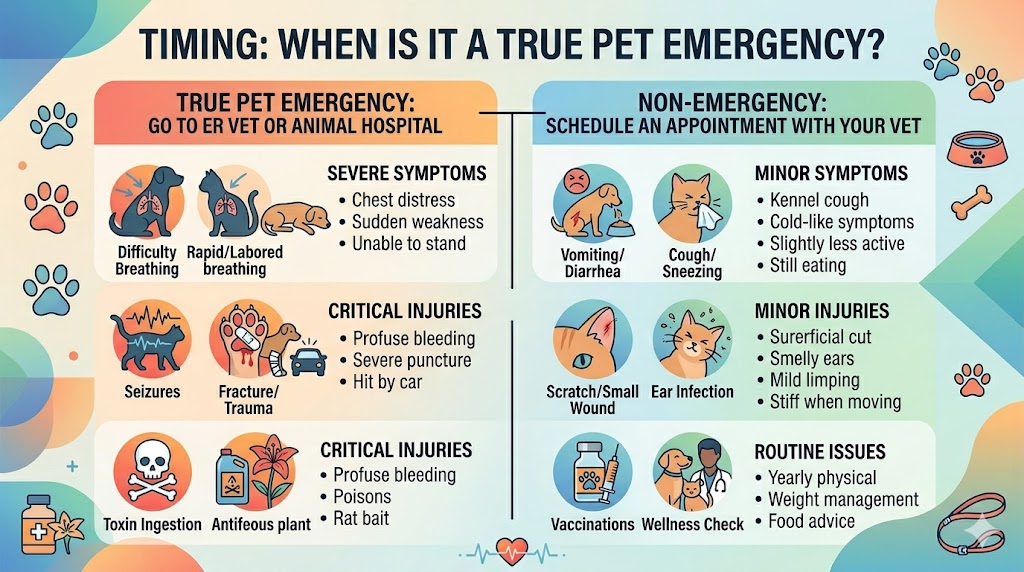
The most significant barrier for many pet owners is “Triage” – assessing whether or not the situation is urgent. Your regular vet serves as a partner in keeping your pet healthy long-term, but an emergency vet is the professional who can provide support during the “golden hour”, where every second becomes critically important.
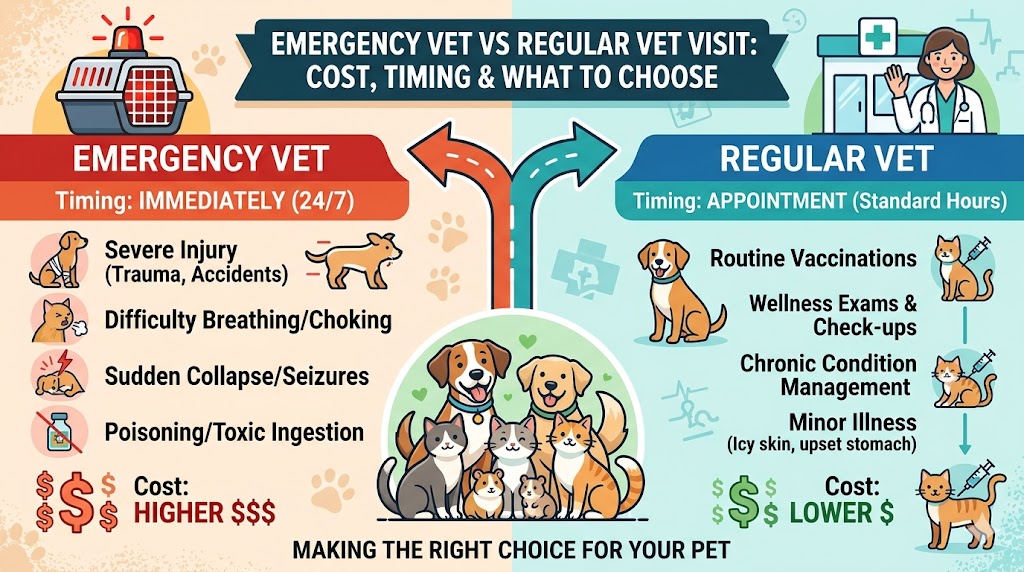
Head to an Emergency Vet immediately if you notice:
- Breathlessness: labored breathing, gasping for air, and/or blue-tinged gums on your pet.
- Major Trauma: Being involved in a vehicular accident; falling a long distance; suffering from a severe animal bite injury.
- Neurological Signs: Having seizures lasting more than two minutes; suddenly collapsing; and/or showing total disorientation.
- Poisoning Due to Ingestion: Eating chocolate; eating grapes; eating lilies; consuming household cleaners/chemicals.
- Abdominal Disturbances: Your pet’s belly appears hard and bloated or your pet attempts to vomit, but cannot (which can often be a symptom of GDV/Bloat).
Stick with a Regular Vet for:
- Routine vaccinations and wellness exams.
- Managing chronic health conditions (e.g., allergy and/or arthritis).
- Treating minor obstetric issues (e.g., mild conditions of itchiness or limping with no lethargy, or with occasional vomiting with no lethargy).
The Cost Factor: What to Expect
When you decide to own a pet, you’ve got to be prepared for budgeting for it. One of the reasons for such a huge difference between the two different types of services is that the emergency facility has a lot of specialized equipment, as well as having staff on duty at all hours.
| Service Type | Estimated Cost (General) | What’s Included |
| Regular Vet Exam | $50 to $100 | Consultation, basic physical, and history review |
| Emergency Exam | $100 to $250 | Immediate triage and prioritization by a critical care team |
| Diagnostics (ER) | $200 to $800+ | Rapid blood panels, X-rays, or ultrasounds |
| Surgery/Hospitalization | $1,500 to $5000+ | Oxygen therapy, IV fluids, and overnight monitoring |
It may be more costly initially to go to an emergency room, but waiting to seek out medical attention for a major medical problem can lead to even more costly (and less successful) methods in the future.
How to Choose: The Decision Matrix
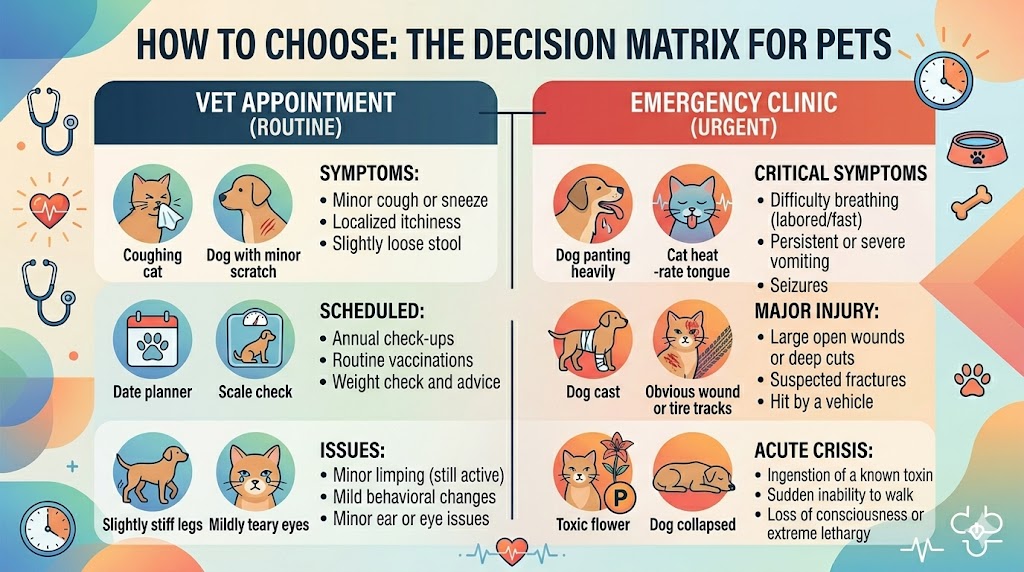
The first thing you should do if you’re unsure of how to handle your pet’s medical issue is to call locally. Most general veterinary clinics will have an after- hours message to get a hold of a partner emergency veterinary hospital.
If your pet has stable vital signs and mild symptoms, waiting to see his/her regular veterinarian, who has the entire medical record of the animal, is almost always a better option compared to going to an emergency veterinary hospital. On the other hand, if the symptoms you are seeing are acute, sudden, or causing your pet extreme pain, your best option will most likely be to go to an emergency veterinary hospital due to their specialized diagnostic methods.
Conclusion
Finding out what’s wrong with your pet’s health isn’t done through luck, and your observation of your pet can lead to more than just the normal vet visit. Understanding what constitutes an emergency for your pet and knowing when to take action will help you to help in time. Feel free to call us on the phone if you have any questions or concerns about your pet’s health. All Creatures Veterinary Center can provide full-service care from preventative medicine to complex medical care in Carrollton, Texas. We will help your pet live as long as possible and give your entire family an enjoyable pet status.
FAQs
Is it okay to call an emergency vet just to ask a question?
Yes, it’s completely normal to call your veterinarian for help if you are having late-night concerns about your dog’s health. Most veterinary emergency clinics would prefer to tell you that you can wait until morning for a regular office visit rather than having you show up with a pet who is already in a critical condition that could have been avoided if you had called first. Although they cannot give you a complete diagnosis, they will assist you in determining whether or not you need to start your car and rush to the clinic.
Why are emergency visits so much more expensive than my regular checkups?
Urgent care is similar to a hospital emergency room as compared to a regular family physician’s office due to having specialized medical machinery always prepared for immediate use, such as oxygen sleds and advanced imaging technology, as well as multiple surgical rooms; however, these emergency facilities also have to have trained veterinary staff and technicians available 24/7 including after hour and holiday shifts to provide this “always ready” service and have the ability to provide critical care treatment in minutes, not days.
What if my regular vet is closed, but it doesn’t feel like a “life or death” emergency?
There is a blurry line between “urgent care” and just plain old “urgent care.” There are two options to consider when you see your pet is not well (but there’s no threat to your pet’s life): you can either call an emergency vet to ask if the wait time is long or search for a clinic that provides urgent (but not as urgent) vet services. Many urgent care clinics have longer operating hours than traditional veterinary practices, but they tend to be less expensive and less intense than a full-service emergency facility.
How do I know if my pet is actually in pain?
Animals are skilled at concealing pain; you can often find clues to their discomfort just like a good detective! Look for signs of anxiety such as: panting heavily for no reason when the temperature is not warm; pacing about the house but not resting comfortably; hiding in places they wouldn’t typically choose; or a sudden change in behaviour. If your pet starts to vocalize (e.g., whining/yelping) there is probably serious pain and you should take your pet to see a veterinarian immediately!