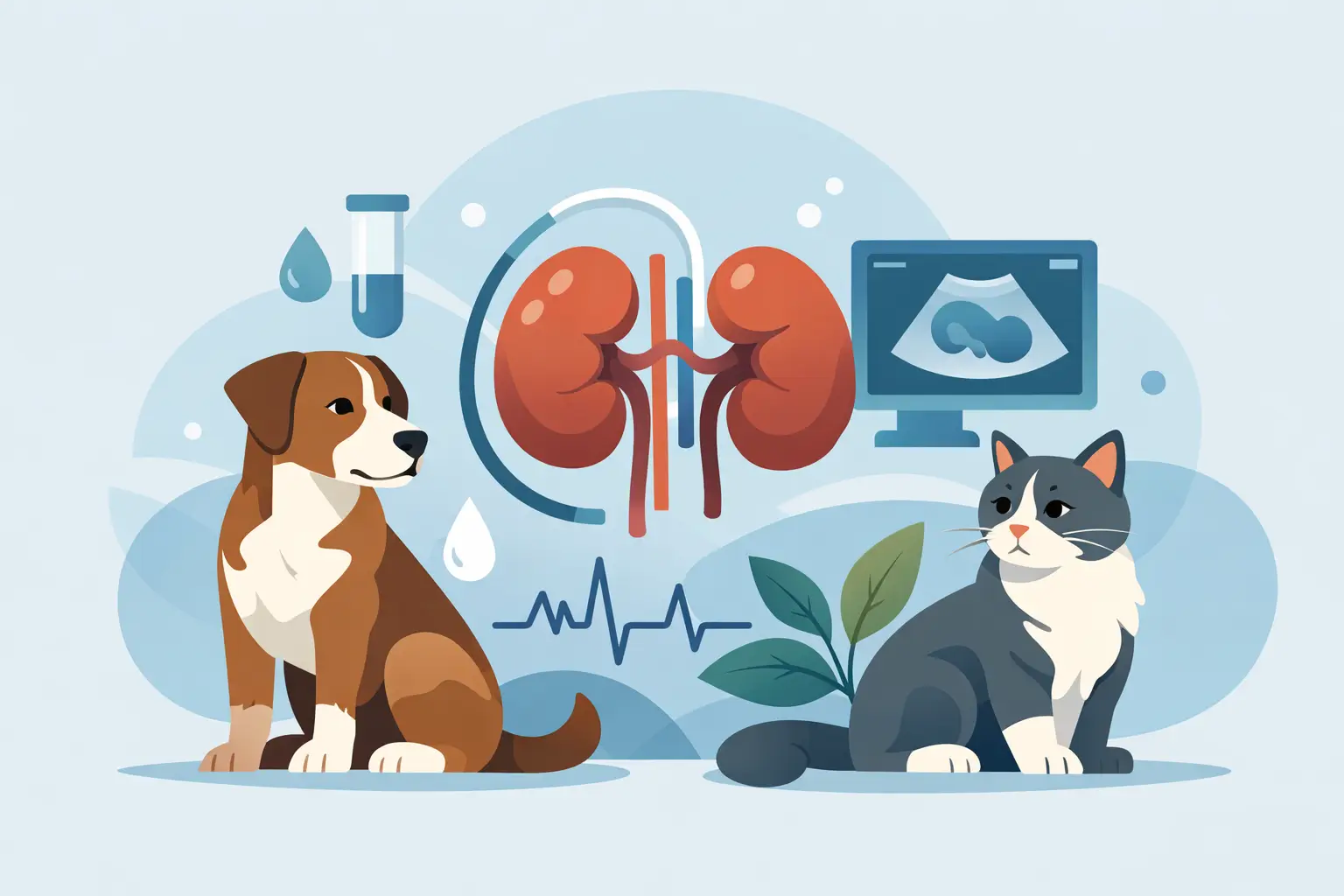
A pet who suddenly seems older than they did a few months ago often tells us something important is changing. Maybe your cat is spending more time at the water bowl, or your dog is asking to go outside more often, losing weight, or skipping meals. Chronic kidney failure is one of the more common reasons we see that gradual shift, especially in older pets, and early attention can make a meaningful difference in comfort and quality of life.
Kidneys do more than make urine. They help filter waste from the blood, balance fluids, regulate certain minerals, and support normal body function in ways most pet owners never have to think about until something goes wrong. When kidney tissue is damaged over time, the body starts to lose that filtering ability. The change is usually gradual, which is why the earliest signs can be subtle.
What chronic kidney failure means
Chronic kidney failure, often also called chronic kidney disease, happens when the kidneys lose function over months or years rather than all at once. This is different from acute kidney injury, which appears suddenly and may be tied to toxins, severe infection, dehydration, or urinary obstruction.
With chronic disease, the kidneys are often working below normal capacity long before a pet looks obviously sick. Cats are affected especially often as they age, but dogs can develop the condition too. In many cases, there is no single moment when it begins. Instead, there is a slow decline that becomes easier to recognize only after enough kidney function has been lost.
That can be frustrating for families because they did not miss one dramatic event. They noticed small changes that were easy to explain away at first – more sleeping, pickier eating, a thinner frame, or a litter box that needs to be changed more often.
Signs of chronic kidney failure in pets
The most common early clue is increased thirst paired with increased urination. If your pet is drinking more water than usual, asking to go out overnight, having accidents in the house, or soaking the litter box, it is worth paying attention.
Other signs can include weight loss, reduced appetite, nausea, vomiting, bad breath, weakness, dehydration, and poor coat quality. Some pets become less social or seem generally uncomfortable without showing obvious pain. In more advanced cases, you may notice mouth ulcers, constipation, or marked lethargy.
Cats can be particularly good at hiding illness. A cat with chronic kidney failure may still greet you at the door and ask for treats while quietly losing muscle mass and becoming dehydrated. Dogs are often a little more outward in their symptoms, but even then, the progression may be slow enough that changes feel like normal aging.
Why it happens
There are several possible causes behind chronic kidney failure, and sometimes we never identify one clear starting point. Age-related degeneration is common, especially in senior cats. Some pets have underlying inflammatory disease, inherited conditions, recurrent kidney infections, high blood pressure, dental disease that has contributed to ongoing inflammation, or past kidney injury that left permanent damage.
It depends on the individual pet. A younger dog with kidney disease may prompt a different diagnostic conversation than a 16-year-old cat who has gradually started drinking more water. Breed, age, medical history, medications, and overall health all matter when building that picture.
Because kidney disease can overlap with other common problems such as diabetes, liver disease, thyroid disease, urinary tract issues, or gastrointestinal illness, testing matters. Symptoms alone do not tell the whole story.
How veterinarians diagnose chronic kidney failure
A diagnosis usually starts with a physical exam and lab work. Blood tests help assess waste products that healthy kidneys should filter effectively. Urine testing shows how well the kidneys are concentrating urine and can also help identify infection, inflammation, or protein loss.
Blood pressure measurement is often an important part of the workup because high blood pressure can both result from kidney disease and make it worse. Imaging, including ultrasound or X-rays, may be recommended to look at kidney size, structure, stones, masses, or other changes.
This is one reason continuity of care matters. When a veterinary team can compare current values with previous bloodwork, trends become easier to spot. A pet may still fall within a broad “normal” range in one area while showing a meaningful decline from their own baseline.
Staging and what it means for treatment
Not every case of chronic kidney failure looks the same. Some pets are diagnosed very early and continue doing well for a long time with monitoring and dietary support. Others are diagnosed later, after appetite loss, dehydration, or vomiting has already become a daily issue.
Veterinarians often stage kidney disease based on lab values, urine concentration, blood pressure, and whether protein is leaking into the urine. That stage helps guide treatment, but it is not the only factor that matters. How your pet feels, eats, drinks, and functions at home is just as important.
A stage number is useful, but it is not a crystal ball. Some pets remain stable for months or years. Others need more active support sooner. The goal is not just extending time. It is protecting quality of life.
Treatment for chronic kidney failure in dogs and cats
Treatment depends on severity and on the problems your pet is experiencing. One of the most effective tools is a prescription kidney diet. These diets are designed to support kidney function and reduce the workload on damaged kidneys. They are not always easy to transition, especially in cats, but when a pet will accept the food, they can be very helpful.
Hydration support is another major part of care. Some pets need periodic fluid therapy at the hospital. Others benefit from subcutaneous fluids given at home, where pet owners are taught how to do it safely and comfortably. Not every family is comfortable with home fluids right away, and that is okay. Treatment plans should fit both the pet and the household.
Medications may be used to manage nausea, stimulate appetite, reduce stomach acid, control phosphorus levels, address protein loss in the urine, or treat high blood pressure. If infection is present, that also needs attention. Pets with advanced disease may need more frequent rechecks and adjustments.
There is usually not a single medication that “fixes” chronic kidney failure. Management is about slowing progression where possible, controlling symptoms, and helping your pet feel better day to day.
What daily life may look like at home
Home care often becomes a partnership between your family and your veterinary team. You may be monitoring water intake, appetite, litter box habits, weight, and energy level. Small changes matter. A pet who skips one meal may simply be having an off day. A pet who starts turning away from food repeatedly needs follow-up.
Routine rechecks are important because pets can compensate for a while, then change quickly. Bloodwork, urinalysis, and blood pressure checks help us adjust treatment before your pet is in crisis.
It also helps to think practically. Cats with kidney disease may do better with extra water sources, easy-access litter boxes, and warmed food to improve interest in eating. Dogs may need more frequent potty breaks and closer observation during hot weather, when dehydration can become a bigger issue.
When to call your veterinarian
Call promptly if your pet stops eating, vomits repeatedly, seems weak, has trouble standing, becomes suddenly disoriented, strains to urinate, or appears severely dehydrated. These signs can point to progression, a separate emergency, or a complication that needs quick care.
Even milder changes are worth discussing if they persist. Waiting too long can mean missing a window where supportive treatment could have improved comfort.
At All Creatures Veterinary Center, we often remind families that chronic illness care works best when questions are asked early, not after a pet has had several difficult days in a row. You do not need to wait until something feels dramatic to reach out.
Living well with chronic kidney failure
A diagnosis of chronic kidney failure can feel heavy at first, but it does not automatically mean your pet is out of good time. Many dogs and cats continue to enjoy family routines, favorite resting spots, gentle walks, and affectionate moments for quite a while after diagnosis. The path is rarely perfectly linear, and there may be periods where treatment needs to change.
What matters most is staying responsive. When pet owners know what to watch for and have a veterinary team they trust, decisions become less overwhelming and more grounded in what their pet is actually telling them. If your dog or cat is showing early signs, getting answers now can give you more options, more comfort, and more good days together.