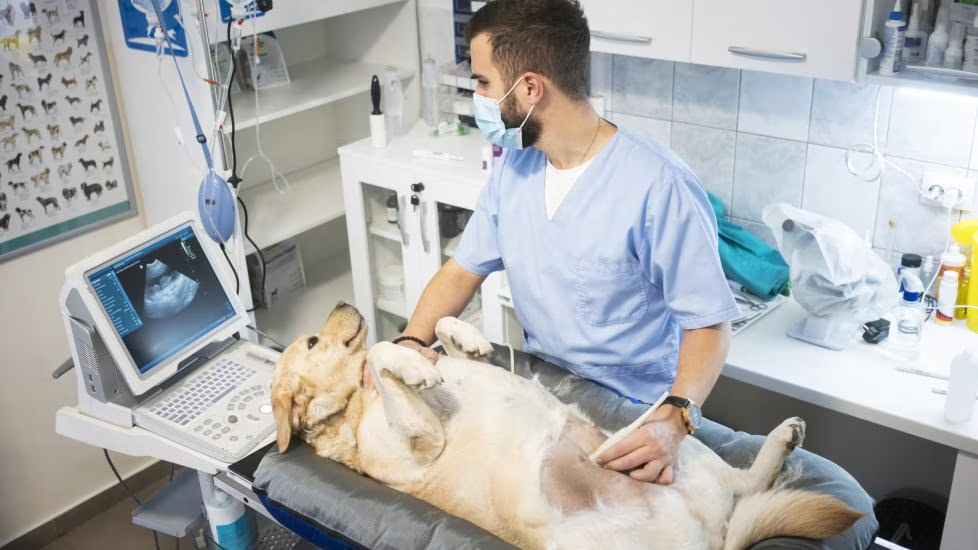
Unlike humans, pets cannot explain their feelings and what they are going through. If your pet is not eating regularly or avoiding the food, this can be a confusing and stressful situation for the pet and the owner. They will not be able to explain why they are not able to eat. This is where veterinary medicine has the abdominal ultrasound process that tells about the condition of the stomach and abdomen of the pet without using the surgical procedure. Vets can use ultrasound to diagnose the main issue and then treat it accordingly.
In this blog, we will talk about the Abdominal Ultrasound for Pets, which is a Safe, Painless Way to see what’s inside.
Understanding the abdominal ultrasound
Abdominal ultrasound is a type of procedure that is often used to diagnose issues in the abdominal area of pets. It is common in veterinary medicine and is the same as humans undergoing an ultrasound. Vets use the tools to check the inner organs of the pet’s abdomen. Sound waves are used to create the organs in the body. The device used to send the sound waves to the belly portion helps create the images of the organs on the screen. This helps doctors to diagnose the issues inside the abdomen.
Why does the pet need an abdominal ultrasound?
An abdominal ultrasound is often used for a detailed and deeper examination of the pet’s abdominal area. When the vets are not able to find out with the physical examination and x-rays, they need an ultrasound to check the main issue. Ultrasound is prescribed by the vet in the following cases.
- When a pet shows symptoms of vomiting and stomach upset
- not eating properly
- Shows signs of sudden weight loss
- Abdominal pain and swelling are frequent
- Not able to urinate properly
- Feeling a lot of fatigue and restlessness
Ultrasound will help to detect the internal issues that are causing these symptoms in dogs. It detects the inflammation, blockages, and other issues inside the pet’s belly.
Will it be safe for the pets to undergo an ultrasound?

It is the safest procedure to detect issues inside the pet’s belly. It is very safe and uses harmless sound waves to create images of the organs on the screen. It does not use X-rays to detect issues in the abdomen and does not cause harm to the internal organs. It is not limited to young pets only and can be used by the elderly and older pets. It does not cause any pain or stress to the human body.
Will there be any pain for the pet?
The best thing about the abdominal ultrasound is that it is painless. It does not cause stress or pain to the pet and can be performed easily without any extra care or setting. You just have to lay your pet down and let the technician slowly move the object called a probe over the abdomen area. There is no need for sedation of the pet, and no needles or anesthesia are used in the procedure. It is a quick and real-time monitoring procedure and is completed in less time.
How is the abdominal ultrasound processed?
The step-by-step procedure for the ultrasound is as follows
- Vets first prepare to conduct a successful ultrasound. If your pet’s belly has a lot of hair, the vet can shave a small portion of hair to smoothly move the probe. This will provide clean images and a correct diagnosis for the doctor.
- A gel is applied to the belly of the pet to make sure the probe moves gently and allows for clear images on the screen.
- Once the gel is applied, the tool is moved over the area to see all the images clearly.
- Vets look at the screen to easily diagnose the organs and look for any unusual abnormalities.
- The whole process can be completed in 30-40 minutes.
What are the main benefits of using an ultrasound for pets?
The main benefits of using an ultrasound for the pets are as follows
- The first benefit is that it is a non-surgical procedure. There is no need to do an invasive procedure to detect the issue.
- This procedure is painless and smooth.
- It is very safe and does not cause any stress or side effects for the organs.
- You will get the real-time results as seen by the doctor.
- It is a very accurate procedure to detect the abnormalities.
When does the vet recommend the ultrasound procedure to the pets?
You have to take into account a stomach ultrasound if your puppy has ongoing health problems that aren’t improving or if the vet suspects an inner issue.
You do not have to ignore the symptoms like vomiting and other frequently occurring symptoms to avoid any issues down the line. Proper diagnosis is necessary for the pet.
Blockquote
Abdominal ultrasound offers a safe, painless way to look inside your pet’s body and detect health issues early—without surgery or stress.
Conclusion
Abdominal ultrasound is a highly effective and painless procedure that is helpful in detecting issues without surgical procedures. It is a safe and quick process to diagnose the deeper and more serious issues. It is common in veterinary medicine to diagnose abdominal issues in pets to provide immediate care and medicines.
All Creatures Veterinary Center is a top veterinary center for pets and is best for ultrasound and other procedures for your pets. Feel free to visit our center to provide care and a proper diagnosis for your pet.
Veterinary Center – All Creatures Veterinary Center
Address – 22722 Lyons Ave #5, Newhall, CA 91321
Phone – (661) 291 – 1124
Frequently asked questions
Which is the best center for abdominal ultrasound in pets?
All Creatures Veterinary Center is the best veterinary center for all the pets that need an abdominal ultrasound.
How much time will it take for the ultrasound to be completed?
Abdominal ultrasound can be completed in 40-50 minutes.
Does the pet need any prerequisites before undergoing an abdominal ultrasound?
Your pet must fast for 10-12 hours before undergoing an ultrasound to get clear results.
Will the ultrasound be able to diagnose the serious issues?
An abdominal ultrasound can easily diagnose serious issues in the abdominal area and other areas.
Will there be any need for sedatives to perform the ultrasound?
No sedative is needed for the ultrasound. If the pet cannot sit still and is anxious, they might need a sedative.