If you’re looking for an effective and natural way to help your pet recover from an injury or manage chronic joint pain, then you’ve probably heard about PRP Therapy for Pets. Human uses of PRP Therapy have become widely used in medical practice, especially by professional athletes. Therefore, it helps us understand that while PRP sounds very “high tech,” the concept of PRP is actually quite simple and can be very effective. PRP therapy, or Platelet Rich Plasma therapy, is a straightforward, minimally invasive, regenerative therapy that has been successful in helping dogs (and some cats) with their recovery. PRP is achieved by taking a medical grade sample of your pet’s own blood, processing it to extract a concentrated dose of your pet’s own Platelets (which contain growth factors), and administering that concentrated dose back to your pet in the area of pain/inflammation or injury. This guide will teach you everything from how PRP therapy works and the procedure to the recovery process of your pet, so that you can properly educate yourself and others (including pet parents and veterinary professionals) about this innovative technique in veterinary medicine.
What Is PRP?
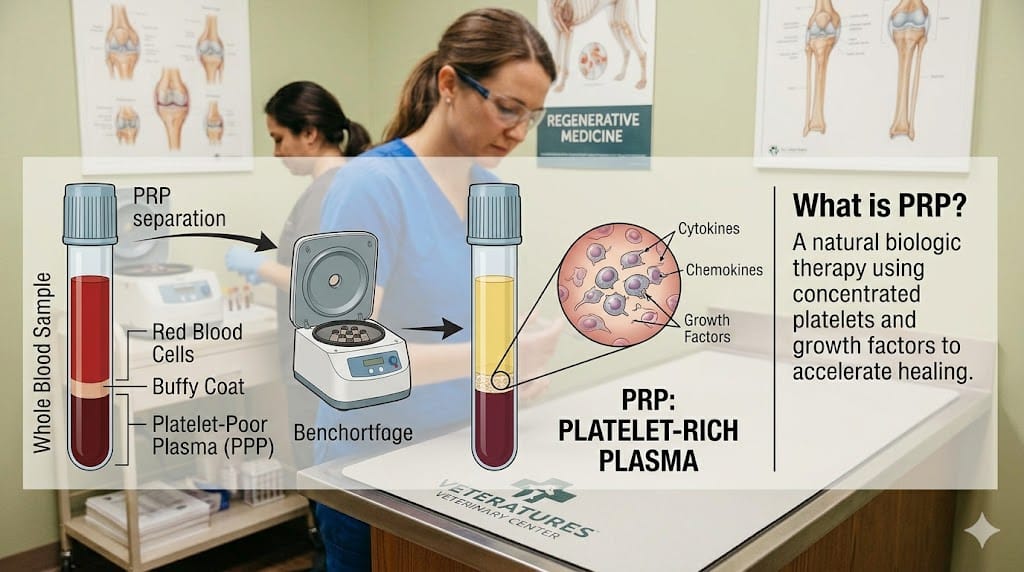
Concentrated Platelet-Rich Plasma is a part of blood that contains platelets (a high source of growth factors) along with cytokines and signaling proteins.
The use of platelets will result in the release of biological (active) factors that will reduce inflammation, repair tissue, improve the supply of blood to an area, and aid in the health of collagen and cartilage.
As PRP is derived from the pet’s blood, it can be considered safe; therefore, the risk of an adverse reaction is minimal.
How PRP Therapy Works
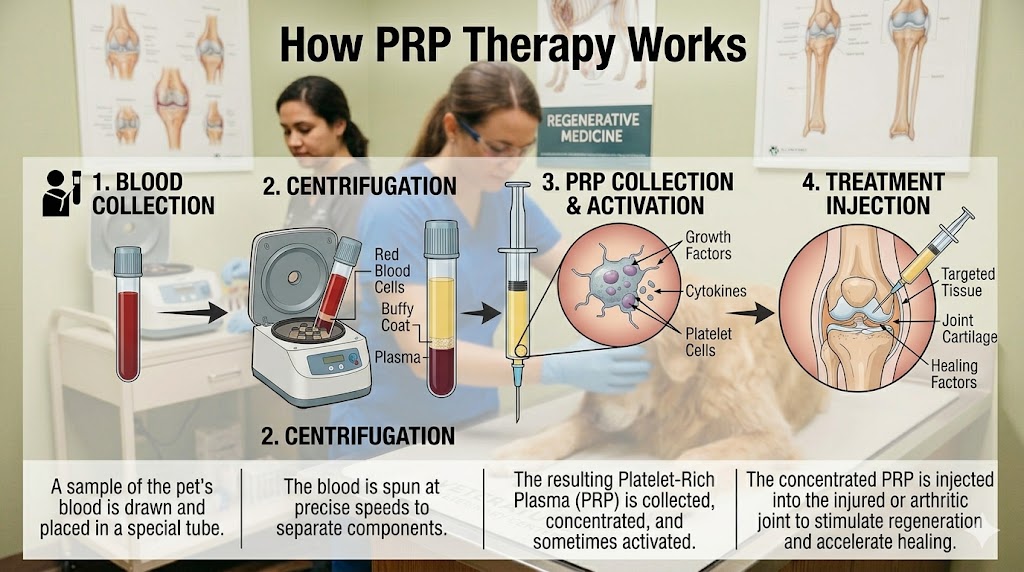
A little bit of blood will be drawn and placed in a tube; the tube will then be put into a centrifuge where the platelets will be separated from the blood; PRP will be obtained and then it will need to be injected back into the area of injury (joint, tendon, ligament, or surgical site) to stimulate healing at that location instead of just providing temporary pain relief.
Conditions Commonly Treated With PRP in Pets
Osteoarthritis and Other Orthopedic or Joint Problems
- Osteoarthritis
- Hip dysplasia and elbow dysplasia
- Developing arthritis/deterioration of the joint early (early degenerative joint disease)
- Inflammation after ortho surgery
Soft Tissue Injury
- Tendon injury
- Ligament strain (partial tear of CCL)
- Muscle injury
- Injuries in sports or working dogs
Post-Surgical Healing
- Faster recovery from orthopedic surgery
- Reduced inflammation/swelling
PRP in Dogs vs Cats
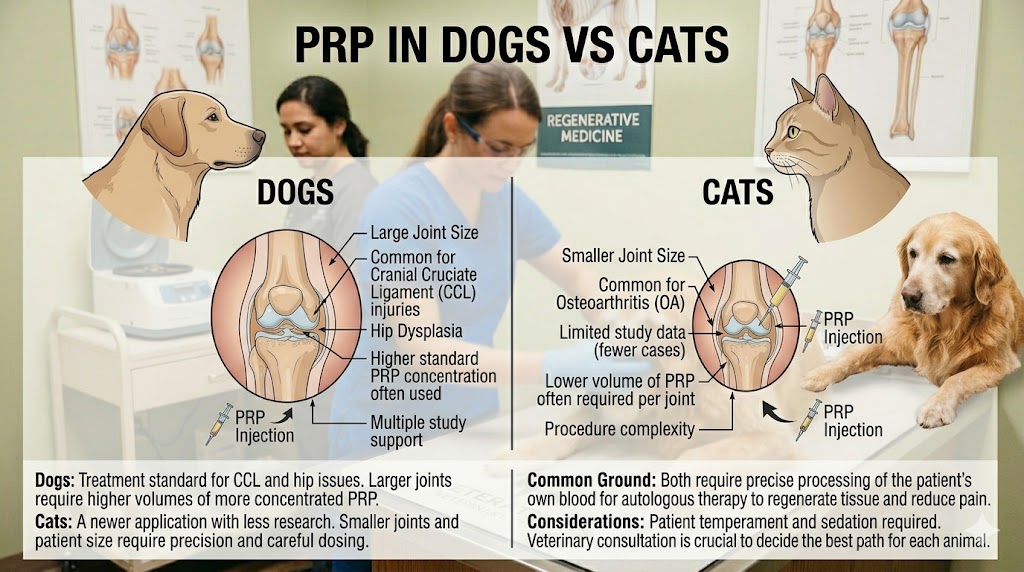
- Dogs: PRP is frequently utilized with consistently good outcomes
- Cats: PRP is used on a selective basis for some conditions like arthritis or soft tissue damage, usually needing to be sedated due to their sensitivity to handling.
Currently, the use of PRP in dogs has been accepted by the veterinary community while the use of PRP in cats is still being researched.
What the PRP Treatment Process Looks Like
Step 1: Assessment
- Assessment of the orthopedic condition
- Imaging of X-rays or ultrasound
- Determine if the patient is a candidate for PRP therapy
Step 2: Blood Draw
- Small blood draw
- No stress to the patient
Step 3: Processing
- A sterile system is used to concentrate the platelets.
Step 4: Injection
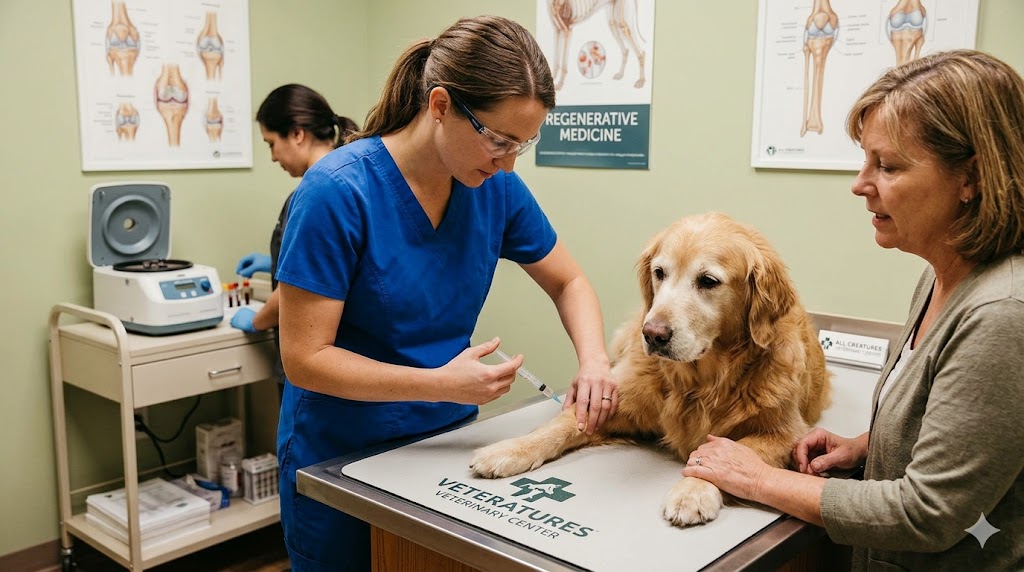
- Injection of PRP into the area of injury
- Often done under ultrasound guidance
- May require light sedation
Most of these procedures require outpatient care.
When Will Improvement Be Seen?
- Initial improvement in your dog/animal/horse: 3 – 14 day range.
- Continual improvement of a dog/animal/horse: Over a 4 – 8 week range.
- Length of improvement in your dog/animal/horse: Several months to 1 year.
Repeat PRP treatments may provide additional benefit for some pets.
Safety & Side Effects
PRP is an extremely safe treatment option.
Possible Mild Effects
- Injection-site soreness
- Mild swelling
- Short-term stiffness
Severe complications are uncommon with the use of PRP.
PRP vs Stem Cell Therapy (Quick Comparison)
| Feature | PRP | Stem Cells |
| Source | Blood | Fat or bone marrow |
| Invasiveness | Very low | Moderate |
| Onset of effect | Faster | Gradual |
| Duration | Shorter | Longer |
| Best for | Acute injury, early disease | Chronic, degenerative disease |
Most of the protocols combine PRP and stem cells for the best results.
Ideal Candidates for PRP Therapy
- Pets with mild to moderate arthritis.
- Partial tears in tendons or ligaments.
- Post-surgical inflammation.
- Pets who cannot be on NSAIDs long term.
- Dogs that are active or working.
PRP therapy will be most beneficial to your pet prior to the development of significant joint damage.
Limitations of PRP
⚠️ Important things to understand:
- PRP is not a cure for end-stage osteoarthritis.
- The results of PRP therapy differ between animals.
- Extensive damage to the joint may still require surgical intervention.
- Lifestyle modification (weight management, rehabilitation) is essential for optimal results.
PRP therapy is most effective when performed as part of a multimodal treatment plan.
Aftercare Following PRP
- Restriction from activities that may cause pain/inflammatory response for at least 24 to 72 hours after treatment.
- Gradual return to pre-PRP Activity Level.
- Follow your veterinarian’s rehabilitation or physiotherapy recommendations.
- Keep an eye out for any swelling or soreness after the treatment.
Most pets return to their normal level of activity within a few days after treatment.
The Role of PRP in Modern Veterinary Medicine
PRP therapy is used extensively in:
- Sports Medicine.
- Orthopedic surgery.
- Rehabilitation & pain therapy.
PRP therapy acts as an intermediate between pharmacological treatment and surgical procedures. PRP therapy promotes healing through means other than major surgery.
Conclusion
PRP therapy is an exceptionally safe, natural and holistic form of regrowth that is provided through the use of the animal’s own platelets to assist in the healing of injured joints, soft tissue injuries or post-surgical inflammation. PRP therapies encourage pets to heal quickly, ambulate normally, and reduce the need for long-term medications. Pets with early-stage arthritis or soft tissue injury should ask the team at All Creatures Veterinary Center about PRP therapy in order to consider it as a potential next step in improving quality of life.
FAQs
Will my pet need to be put under for the procedure?
Typically not! At All Creatures Veterinary Center, most animals that have blood drawn and/or injected with a local anaesthetic or light sedation do not need sedation for their blood draws & injections. Since it’s an outpatient procedure, you’ll drop them off and pick them up later the same day for dinner.
How soon will I see my dog (or cat) acting like themselves again?
Although many individuals are able to see a difference after 1 week of the treatment where they will have more energy than they did before, the real results occur over a longer period of time (3 – 4 weeks). A pain medication can give you immediate relief by blocking pain; however, the body does not actually repair itself until 3 – 4 weeks after the injection. So you will see them advancing; you may notice them walking for longer periods with less stiffness.
My pet is already on pain meds. Can they still do PRP?
An important goal at All Creatures Veterinary Center is to use PRP to help pets decrease their use of long-term anti-inflammatory medications that can eventually have a negative impact on their liver or kidneys.
How long do the results last?
Like people, each pet has its own unique personality and preferences, so how long do patients benefit from this procedure? Most patients experience lasting benefit from 6-12 months after one or two treatments with their pets; however, some patients may require additional “boosters” to maintain their improved state after their pet’s last treatment.