When your pet is in pain, having answers quickly matters. One of the most important ct scan benefits is that it can show detailed cross-sectional images of the body in a way standard X-rays often cannot, helping your veterinary team move from guesswork to a clearer plan.
For many pet parents, a CT scan sounds intimidating at first. It is advanced imaging, and that can bring up understandable questions about safety, cost, and whether it is really necessary. In the right situation, though, CT imaging can be one of the most useful tools in veterinary medicine because it helps us see injuries, disease, and structural problems with a level of detail that can change what happens next.
What a CT scan actually shows
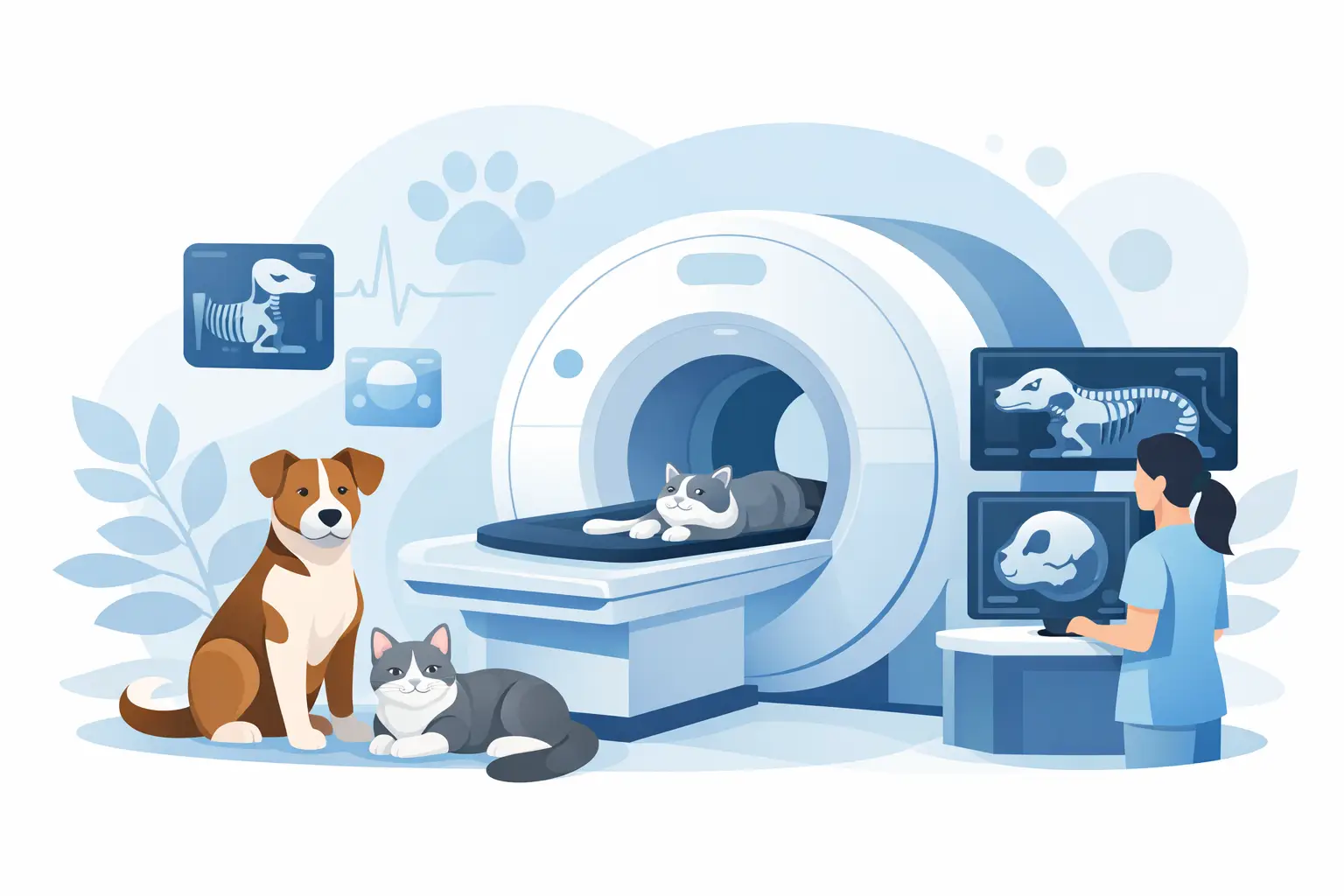
A CT scan, short for computed tomography, takes multiple X-ray images from different angles and combines them into detailed slices of the body. Instead of looking at one flat image, your veterinarian can evaluate bones, joints, airways, sinuses, the chest, parts of the abdomen, and certain masses in much finer detail.
This matters because many conditions do not show up clearly on regular radiographs. A small nasal tumor, a complex fracture, subtle spinal changes, or a deep inner ear problem may be difficult to define on standard imaging. A CT scan gives more information about size, shape, location, and how a problem may be affecting nearby structures.
The most important CT scan benefits
The biggest benefit is clarity. When a pet cannot tell us exactly where it hurts, better imaging helps narrow down the cause more quickly and more confidently.
Another major advantage is speed. CT scans are usually performed much faster than MRI studies, which can be especially helpful for pets who need prompt answers after trauma or while dealing with severe pain, breathing issues, or suspected internal disease. Faster imaging often means faster treatment planning.
CT is also valuable for surgical planning. If a dog has a complicated orthopedic injury or a cat has a mass in a difficult location, detailed imaging helps the veterinary team understand what they are dealing with before any procedure begins. That can improve precision and reduce surprises.
There is also a practical benefit for pet owners. Better information can prevent delays, repeated testing, or treatment plans based on incomplete data. While advanced imaging is an investment, it can save time and frustration when a condition is not straightforward.
CT scan benefits in emergency and urgent cases
Some of the clearest ct scan benefits show up in urgent situations. If a pet has been hit by a car, suffered a fall, or is showing sudden neurologic signs, your veterinarian may need to know very quickly whether there are fractures, bleeding concerns, skull injuries, spinal issues, or chest trauma.
CT can be especially helpful when standard X-rays suggest a problem but do not tell the full story. A fracture may extend into a joint. A chest abnormality may involve more than one area. A nasal or facial injury may be much more complex than it first appears. In those moments, detailed imaging supports safer and more effective next steps.
It is not the right choice for every emergency. If a pet is medically unstable, the first priority is always stabilization. But once your pet is safe enough for imaging, CT can provide information that shapes everything from pain management to surgery recommendations.
When CT is often recommended for pets
Veterinarians may recommend CT for several different reasons, depending on your pet’s symptoms and exam findings. It is commonly used to evaluate complex fractures, chronic nasal discharge, suspected tumors, dental and jaw disease, spinal concerns, certain neurologic cases, chest abnormalities, and ear disease.
It can also help when symptoms have gone on for a while without a clear answer. A dog with persistent lameness, a cat with chronic congestion, or a pet with unexplained swelling may need more than bloodwork and standard radiographs. CT helps fill in gaps when earlier tests point to a problem but do not fully define it.
For some pets, ultrasound is the better next step. For others, MRI may be more useful, especially for specific soft tissue or brain and spinal cord conditions. The best imaging choice depends on what your veterinarian is looking for.
CT vs. X-rays and ultrasound
Pet owners often ask why a CT scan is needed if their pet has already had X-rays. The answer is that these tools do different jobs.
X-rays are excellent first-line diagnostics. They are quick, widely available, and very useful for many common issues. But they create a two-dimensional image, which means structures can overlap. That overlap can hide important details.
CT removes much of that limitation by creating thin image slices and allowing the doctor to examine the area from multiple views. This is one reason CT is so useful for the skull, spine, chest, and complicated orthopedic injuries.
Ultrasound is another valuable tool, especially for abdominal organs and the heart, but it is not designed to answer every question. If the concern involves bone, air-filled spaces, or complex anatomy, CT may provide better detail.
What to expect if your pet needs a CT scan
Most pets need sedation or anesthesia for a CT scan. That is not because the scan itself is painful. It is because clear images require your pet to stay very still, and even small movements can affect image quality.
Before the scan, your veterinary team may recommend bloodwork and a physical exam to make sure sedation or anesthesia is as safe as possible. In some cases, contrast material is used to highlight blood vessels or certain tissues more clearly. If contrast is needed, your veterinarian will explain why.
The scan itself is usually quick. Preparation and recovery often take longer than the imaging portion. Once the scan is complete, the images are reviewed so the team can discuss findings and talk through the next step, whether that means monitoring, medication, surgery, referral, or additional testing.
Is a CT scan safe for dogs and cats?
For most pets, CT is considered safe when performed with appropriate monitoring and planning. The main consideration is usually the sedation or anesthesia rather than the imaging itself. As with any medical procedure, risk is not zero, especially for senior pets or those with underlying heart, lung, or systemic disease.
That said, there is also risk in not having enough information. If your pet has a condition that could worsen without a diagnosis, advanced imaging may be the safest path toward the right treatment. This is where individualized care matters. A veterinarian will weigh your pet’s age, symptoms, medical history, and stability before recommending CT.
How CT scan benefits support better treatment decisions
The true value of CT is not just better pictures. It is better decisions.
A scan can confirm whether surgery is needed, show that a mass is more extensive than expected, reveal that a problem is more manageable than it first seemed, or help avoid a procedure that would not solve the issue. It can also guide a referral when specialty care is the best next step.
For families, that kind of clarity can bring relief even when the news is difficult. Not knowing is often the hardest part. When imaging helps define the problem, you and your veterinary team can make informed choices with more confidence.
At a full-service hospital like All Creatures Veterinary Center, advanced diagnostics are part of a bigger picture. Imaging is most helpful when it is paired with a team that knows your pet, explains findings clearly, and can connect those results to treatment, surgery, rehabilitation, or ongoing support.
If your veterinarian recommends a CT scan, it does not automatically mean the situation is worst-case. It usually means they want the most accurate information possible before moving forward. That is a careful, thoughtful approach to medicine, and for many dogs and cats, it is one of the best ways to protect comfort, function, and quality of life.
When your pet is family, clearer answers matter. A CT scan cannot fix every problem on its own, but it can be the step that turns uncertainty into a plan you can trust.