Saying goodbye to a beloved dog or cat is one of the hardest moments a family can face. When pet cremation after euthanasia is part of that decision, many people feel unsure about what happens next, what choices they have, and how to make the right call while they are grieving.
That uncertainty is normal. Most families are making these decisions while carrying a lot of emotion, and very few have gone through the process before. Clear information can make an overwhelming day feel a little more manageable.
What pet cremation after euthanasia usually involves
After euthanasia, your veterinary team will ask how you would like your pet’s remains handled. For many families, pet cremation after euthanasia feels like the most practical and meaningful option because it allows them to keep ashes, scatter them later, or simply avoid making burial arrangements at home.
The basic process is straightforward. After your pet passes, the hospital carefully prepares the body and follows the instructions you approved. Your pet is then transferred to a cremation provider, the cremation takes place according to the type of service you selected, and the ashes are either returned to the veterinary hospital or handled as directed.
Even though the steps are simple, the emotional side is not. Some families want to take time with their pet before leaving the hospital. Others prefer to step away quickly because staying feels too painful. Both responses are completely understandable.
Understanding your cremation options
The most important distinction is usually between private cremation and communal cremation. In a private cremation, your pet is cremated individually and the ashes are returned to you. In a communal cremation, pets are cremated together and ashes are not returned.
For some families, getting ashes back is deeply important. It gives them something tangible to bring home and can be part of how they honor the bond they shared. For others, communal cremation feels right because they do not want the responsibility of deciding what to do with remains later.
There is not a universally correct choice. It depends on your preferences, your beliefs, your budget, and what will feel most comforting in the weeks ahead.
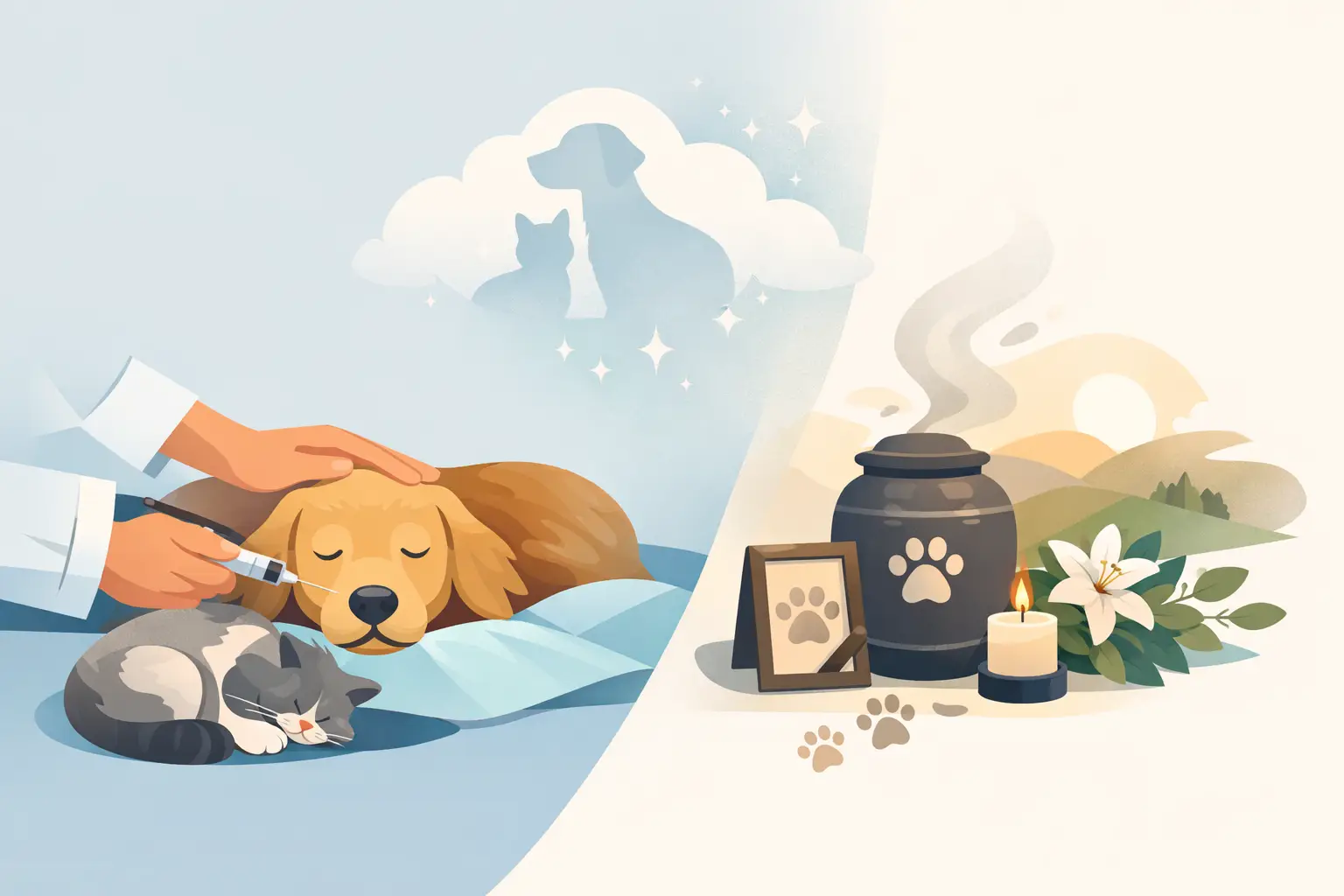
Some cremation providers also offer memorial items such as urns, paw prints, or keepsakes. These can be meaningful, but they are not necessary. If these options bring comfort, they may be worth considering. If they feel like too much during an already difficult time, it is perfectly fine to keep things simple.
When these decisions are usually made
In many cases, cremation choices are discussed before euthanasia begins. That timing can feel uncomfortable, but it is often kinder than trying to cover logistics immediately afterward, when emotions may be even more intense.
If your pet is aging or has a serious illness, it can help to talk through end-of-life options before the final appointment. Planning ahead does not make the loss less painful, but it often reduces pressure in the moment. You can ask about cremation types, timelines, pricing, and whether ashes can be returned in a standard container or an urn.
When families have not had that conversation in advance, the veterinary team can still walk them through it with care. A good hospital will explain the options clearly, answer questions without rushing, and help you make a decision that fits your family.
How long it takes to receive ashes
One of the most common questions about pet cremation after euthanasia is timing. In most cases, ashes are returned within several days to two weeks, depending on the cremation provider’s schedule, transport timing, and the memorial selections made.
If timing matters to you, ask directly. Some families want ashes back quickly for personal reasons or because they are planning a memorial. Others are comfortable waiting as long as they know what to expect.
It is also reasonable to ask how you will be notified when the ashes are ready and whether pickup happens at the veterinary hospital. Small details like that can make the process feel less uncertain.
What happens to your pet’s body after euthanasia
Many people hesitate to ask this question, but it matters. Your pet should be handled with dignity from the moment they pass. Veterinary hospitals that provide end-of-life support generally have respectful protocols in place for identification, preparation, and transfer.
That may include labeling, documentation, and coordination with a trusted cremation partner to help ensure the service selected is carried out correctly. If you want to know exactly how your hospital manages this process, it is okay to ask. Families often feel more at peace when they understand that their pet will be treated gently and respectfully at every step.
How to decide what is right for your family
Practical decisions can feel strangely difficult during grief. A choice that seems simple on paper may carry a lot of emotional weight once it involves your pet.
Start with what matters most to you. If having your pet’s ashes nearby would bring comfort, private cremation may be the best fit. If you do not feel attached to keeping ashes and would rather avoid another decision later, communal cremation may feel more manageable.
Budget can also be part of the discussion. Private cremation usually costs more than communal cremation, and memorial products can add to the total. There is nothing unloving about considering cost. Making a responsible financial decision for your household does not lessen the care you gave your pet.
For families with children, it may help to think about what will support them emotionally as well. Some children take comfort in a paw print or a small urn. Others do better with a photo, a framed collar, or planting something in memory of their pet. Grief looks different from person to person, even within the same household.
Questions to ask your veterinary team
If you are facing euthanasia soon, it helps to ask a few practical questions ahead of time. You may want to know what cremation choices are available, whether ashes can be returned, how long the process usually takes, what the expected cost will be, and whether memorial keepsakes are offered.
You can also ask who to contact if questions come up afterward. Grief tends to cloud memory, and many families think of important questions only after they get home. A compassionate veterinary team understands that.
At a full-service hospital such as All Creatures Veterinary Center, end-of-life care is part of a broader commitment to support pets and families through every stage of life. That continuity matters. When the team already knows your pet’s medical history and your family’s concerns, conversations about quality of life, euthanasia, and aftercare can feel more personal and less overwhelming.
The emotional side of bringing ashes home
Some families feel immediate comfort when the ashes are returned. Others are surprised by a fresh wave of grief. Both reactions are common.
You do not need to know right away what to do with the ashes. Some people place them in a quiet spot at home. Others wait months before deciding whether to scatter them, move them into a special urn, or keep them stored safely. There is no deadline for making that choice.
The same is true for memorializing your pet. A framed photo, a favorite leash, a donation in their name, or a simple moment of remembrance can all be meaningful. What matters is not how elaborate it is, but whether it feels genuine to your relationship with your pet.
Why gentle guidance makes a difference
When families think about euthanasia, they often focus on the final appointment itself. But aftercare matters, too. The hours and days after a loss can feel disorienting, and clear communication from your veterinary team can ease some of that burden.
That is why it helps to work with a hospital that approaches end-of-life care with both compassion and professionalism. You deserve honest answers, transparent pricing, respectful handling, and a team that understands this is not just a service decision. It is part of saying goodbye to a member of your family.
If you are trying to plan ahead, give yourself permission to ask questions now rather than later. A thoughtful conversation before the day comes can bring a little more peace when you need it most.