What a huge relief it must be to walk through your front door with your pet after their cystotomy! For hours leading up to your pet’s surgery, you’ve probably checked your phone every couple of minutes for an update on their surgery from the surgical team. Now that the surgery is over, you have the responsibility of making sure that your pet recovers from surgery successfully. For the next two weeks, you’re the personal private nurse to your pet. Changing from your normal routine of long walks to short quiet cuddles or your normal routine of active playtime to closely monitoring your pet will help guarantee that your pet has a successful surgery for many years to come. Think of your pet’s recovery as your opportunity to use your time, energy, and money to provide for your pet’s comfort in the future. Below we have put together a guide day by day to help you navigate the “grogginess”, the “cone of shame”, and the first time your pet excretes after being put under anesthesia.
Here in this blog, we give you proper information about cystotomy recovery, so stay tuned with this blog.
The First 24 Hours: Peace, Quiet, and Patience
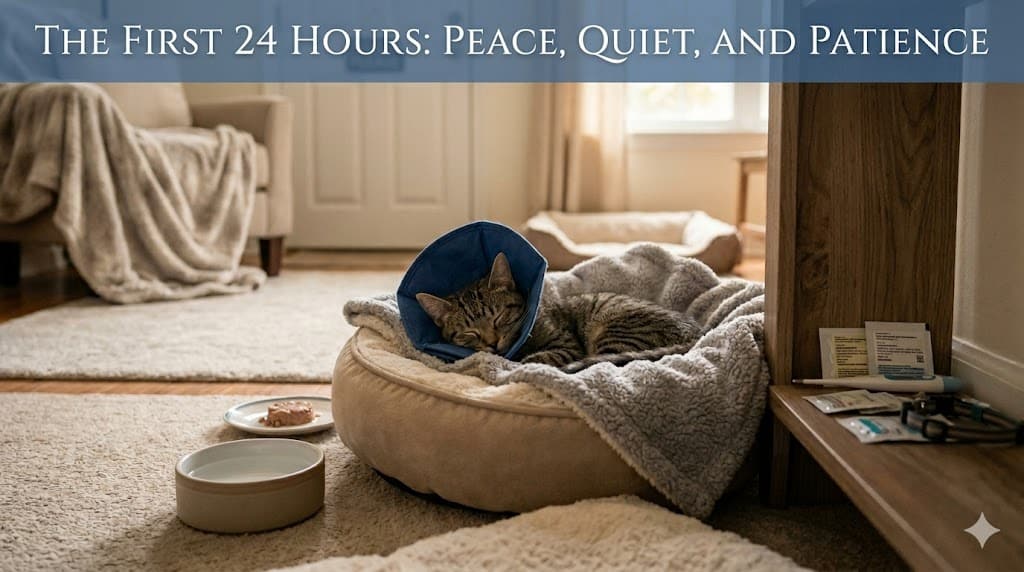
Days one and two are entirely focused on allowing the effects of hospitalisation to wear off. It is acceptable for your pet not to be acting normally at this time.
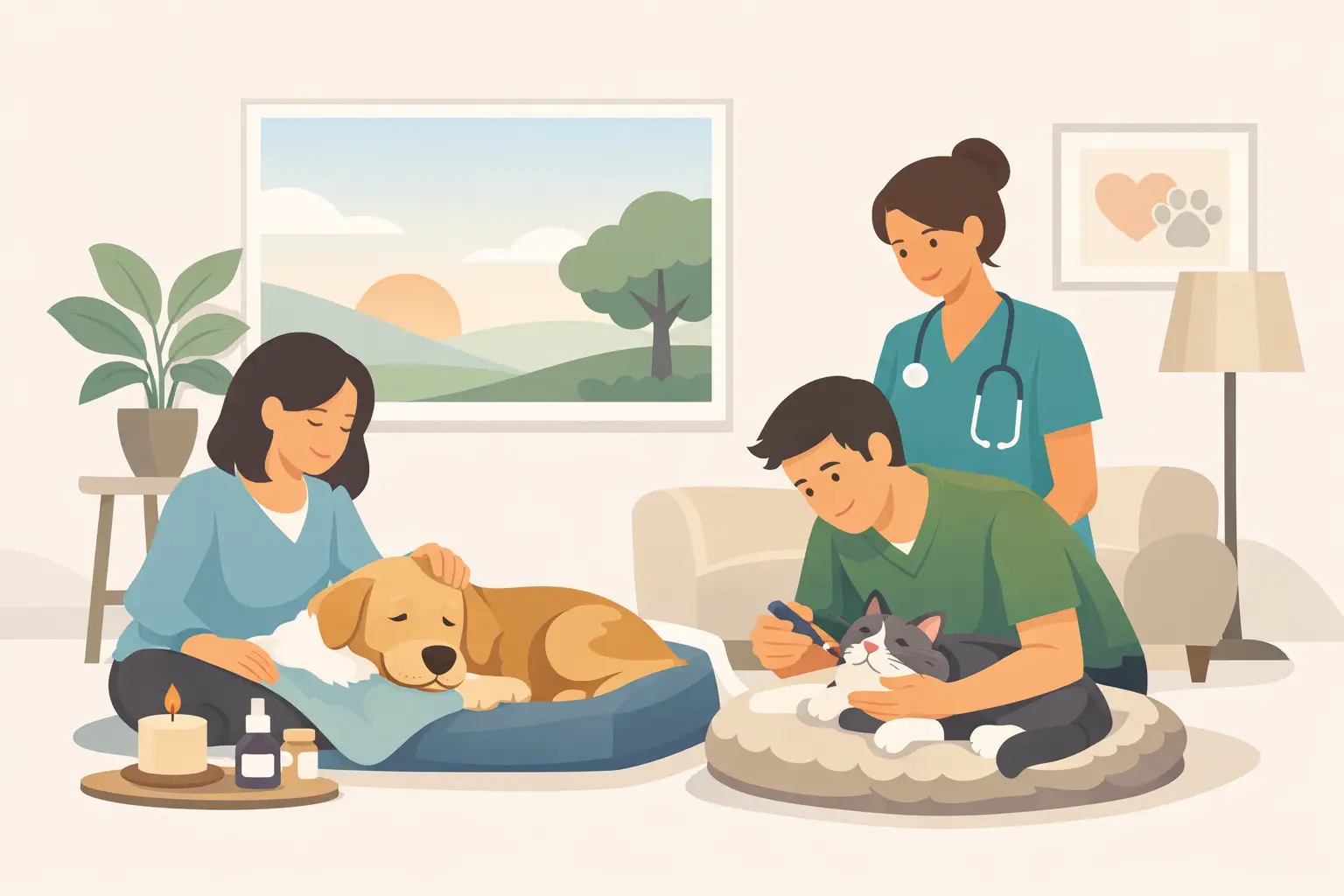
- Managing the “fog” – Expect your pet to be very groggy (as a result of the anaesthesia and the pain medication), and therefore may be wobbly and/or uninterested in their usual activities. It is best to give your pet a warm, quiet ‘sanctuary’ away from the hustle and bustle of traffic for the first day to recover from the anaesthetic.
- First meal – After reviewing your dog’s post-operative instructions you should start to feed them approximately ½ of a usual portion (i.e., feed them a bland, and easily digestible meal). If they do not eat anything for their first meal, there is no need to be concerned, as it may take your pet 24 hours for their appetite to return to normal.
- Safety – Keep your pet on the ground floor, as their coordination will not be at 100% and therefore climbing stairs or jumping onto furniture will create a potential hazard for them.
- Potty – Take your pet outside on a very short and slow leash; if you see that your dog has pinkish or tea-coloured urine there is nothing to be concerned about, as they are normal and will go away once their bladder heals.
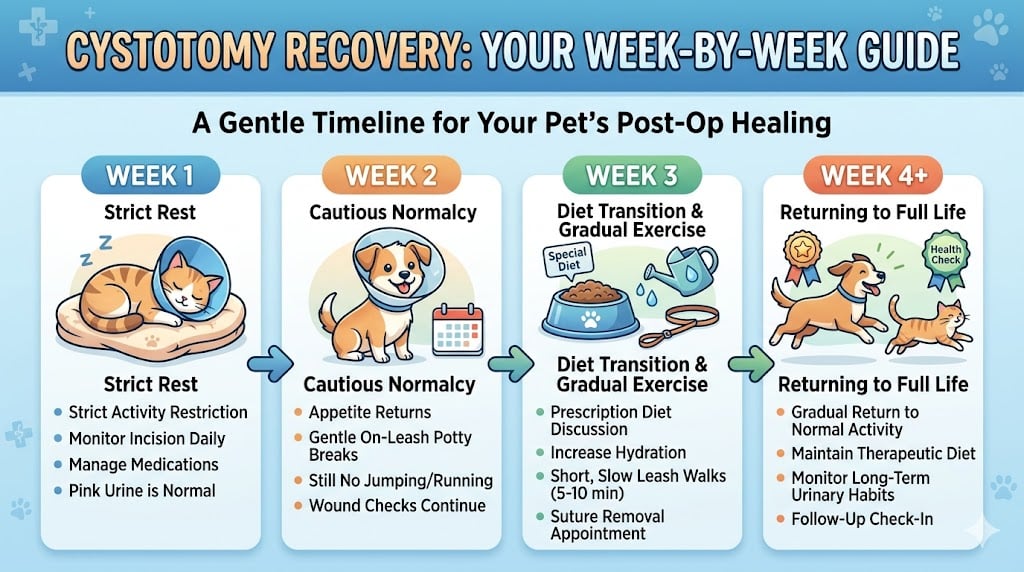
Week 1: The Strict Healing Phase
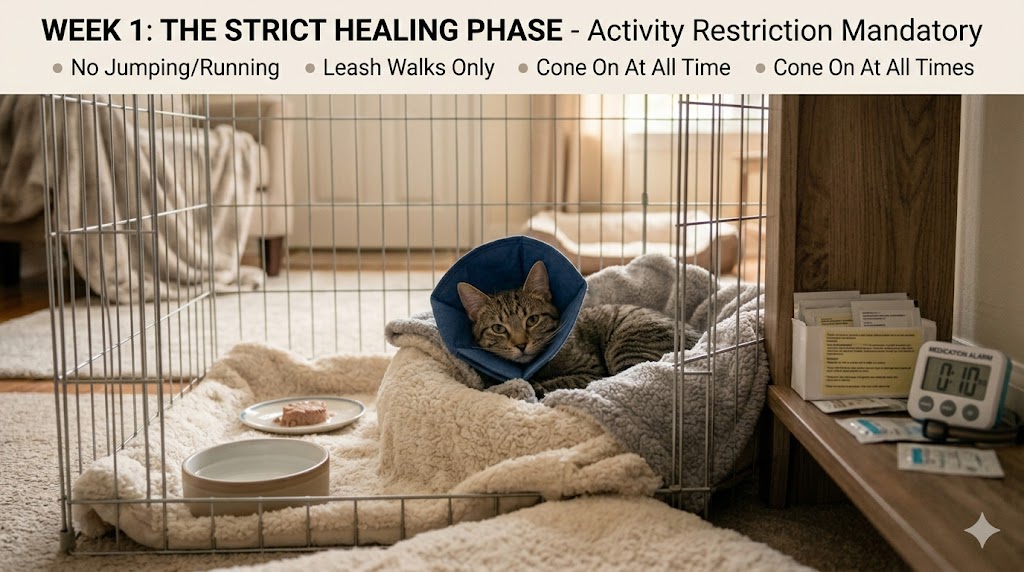
The days following surgery, particularly Day 2 to Day 7, are the most critical time period for both the internal and external sutures. This is known as the “lockdown” phase of recovery.
Mandatory Activity Restriction
This will frequently be the most difficult rule for owners to enforce. Although many pets will start to feel better after Day 4, it is still essential that all running, jumping and rough play be avoided. If you cannot directly supervise your pet, it should be confined to either a crate, an exercise pen, or a small, cat-proofed room.
The Non-Negotiable Cone
The cone must remain on your pet until approved for removal by your veterinarian. It takes just a few seconds of your pet licking the incision for them to introduce bacteria or remove a suture. This can lead to compromising their surgical site and/or a significant infection.
Monitoring the Surgical Site
Beginning on the day following surgery, it is very important to assess the surgical site collar every day for swelling, redness, and/or drainage. Some swelling and minor bruising is expected as part of the normal healing process. When checking the surgical site on your pet, you are looking for changes such as:
- Draining or a constant dripping from the site
- A foul smelling or pus-like discharge
- Gaps opening in the skin
Week 2: Turning the Corner
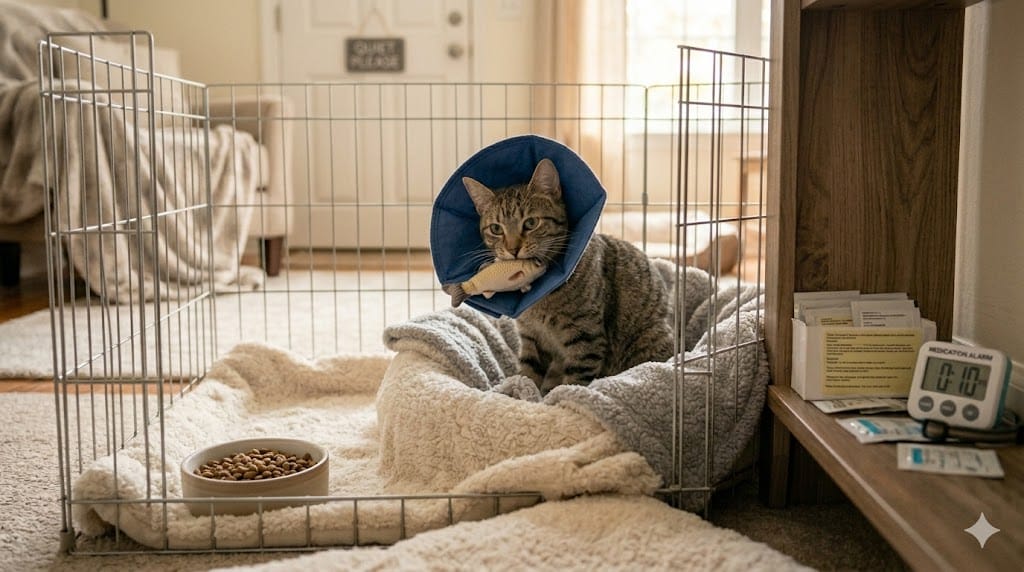
In two weeks, your pet will likely start to want to go outside for a walk or fetch, but hold on! There is still a lot of healing to take place beneath the skin.
- Incision Changes: You will probably see some of the redness go away. The incision will feel firm as scar tissue begins to form. This is good!
- Gentle Movement: After you receive your veterinarian’s approval, start to take your pet for short, calm leash walks (5 to 10 minutes) as they need to get to use their legs again but you need to remain strictly “business-like.”
- Follow-Up Appointment: Most pets will have a follow-up appointment around day 10-14; this is so that your medical team can check your pet’s healing and remove any external sutures.
When to Call for Help
Although most recoveries are relatively uneventful, please monitor closely for the following red flags:
- Lack of urine production and straining.
- Vomiting more than once after the first day of recovery.
- Gums are very pale and your pet is extremely lethargic.
- Signs of severe pain (excessive whining and unwillingness to move).
A pet’s recovery is a journey, and you do not have to go it alone. All Creatures Veterinary Center will assist you in getting your pet back to being happy and healthy. By adhering to the recommended rest and the prescribed diet, you are giving your pet the best chance possible for a life free of stones and the problems associated with them.
FAQs
Is it normal to see blood or a pinkish tint in their pee?
It may seem odd but bluish-red or with a tint of tea color urine is quite common during 1-3 to 5 days after surgery. The bladder is an extremely sensitive structure and is in essence, healing from within. As you go through this week, you should see the colour gradually change to a bright yellow because of the wound healing process.
My pet is straining to go. Should I be worried?
It is normal to have some trouble passing urine. Your animal may think they have to urinate because their bladders are inflamed and painful; therefore, they may feel like they need to urinate all the time regardless of whether there is any urine left in their bladders. The golden rule to remember for your animal is that if they are straining, but there is still some urine coming from them, then everything is fine. However, if they continue to push even though no urine comes out, this is a medical emergency where you should contact a veterinarian right away.
They aren’t interested in their food. What can I do?
You should not become concerned if your furry friend has not eaten for several days following anesthesia as it may cause a little tummy upset/nausea for the next 24-48 hours. You can try to work around this by offering them something warm and bland such as boiled chicken/rice (or if applicable to your pet’s respective breed or condition, utilize a specialized post-surgical recovery diet). If your pet still hasn’t eaten by two complete days post surgery attempt reaching out for advice from your veterinarian.
How on earth do I keep the “cone” on them?
The “cone of shame” might not be your favourite thing, but it is the only protection for your pet from potential surgical complications. You should make sure that the collar fits snugly and with enough space for you to be able to place two fingers between your dog’s collar and neck. Use praise and treats to help create a positive association with the cone. If your pet is struggling with adjusting to the cone, inquire with your veterinarian about using some type of alternative (like a recovery suit or inflatable collar), but do not leave your pet for any longer than absolutely necessary without proper approval from your veterinarian before doing so.
What does a “healthy” incision actually look like?
The site should appear dry, clean, and stay closed and have some bruising or mild pinkness around the edge. Active oozing, foul odor, green/yellow drainage, or significant swelling are abnormal. If the area looks “angry” or begins to open – call us.
My pet is acting very groggy and tired. Is this okay?
Yes, general anesthesia can have a significant impact on small children, and it can take anywhere from 24 hours to 2 days for the full effect of general anesthesia to dissipate from their systems. Keep them in a quiet, safe place as they will recover their energy and zest for life over the next several days.