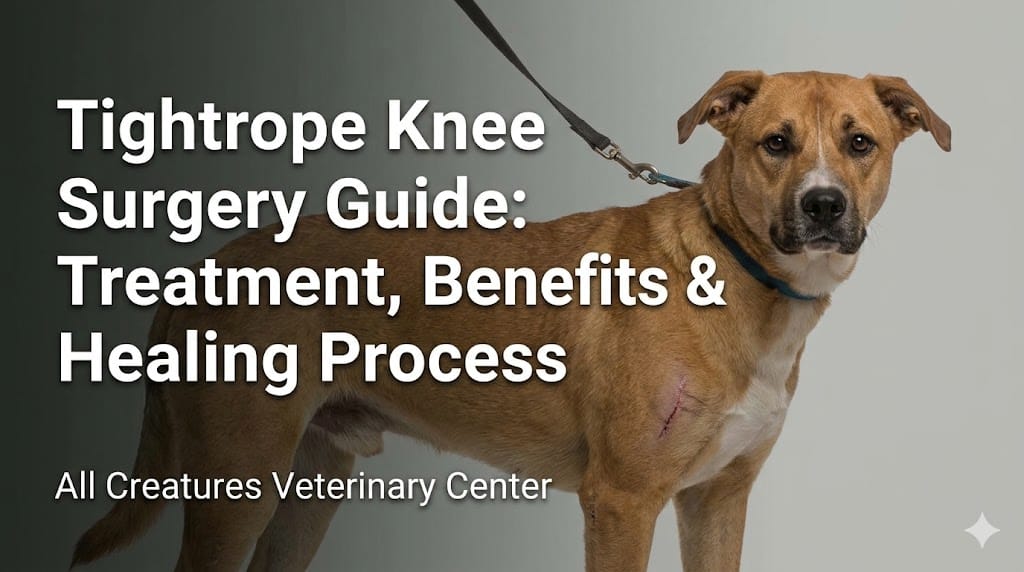
Watching your old friend, who was once lively and playful, suddenly become unable to walk, or even barely be able to get up for a treat can be gut-wrenching. If you watch their spirit fall because they have torn their CCL (the canine equivalent of a CCL in humans), it can be painful for you as a pet lover. A torn CCL is not only a serious physical wound; you feel as though something is taking away your dog’s joy of living. When a CCL tears and becomes injured, the knee (stifle) joint becomes unstable and is established in pain; and if not treated promptly, your dog will often develop arthritis in that knee joint over time. That’s why it is so important to learn about Tightrope Knee Surgery. It is a very unique, less invasive option that has been developed to stabilize a torn CCL and to return your pet to his or her fun-loving, playful self as soon as possible!
What Exactly is Tightrope Knee Surgery?
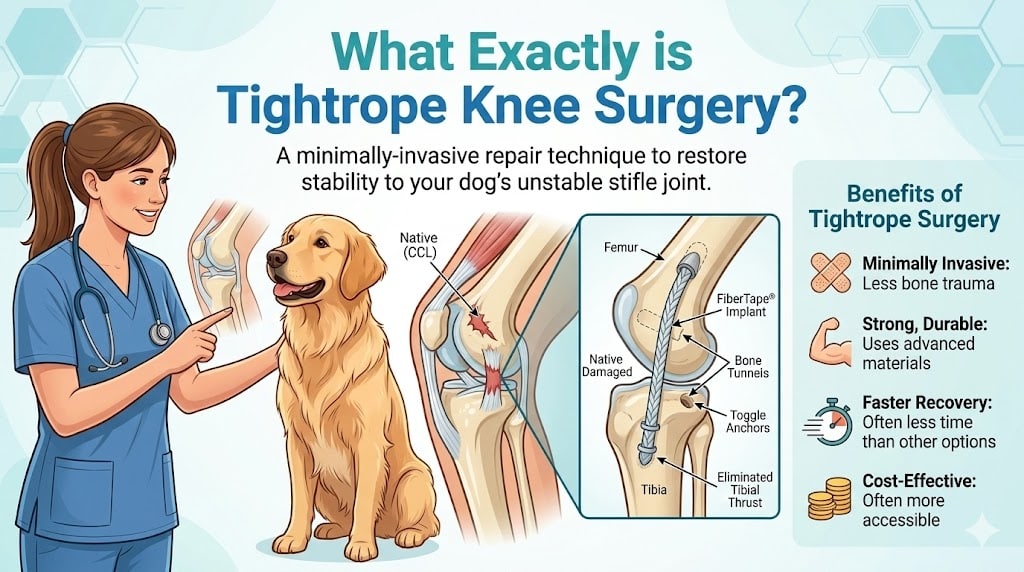
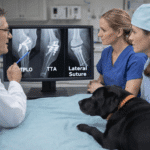
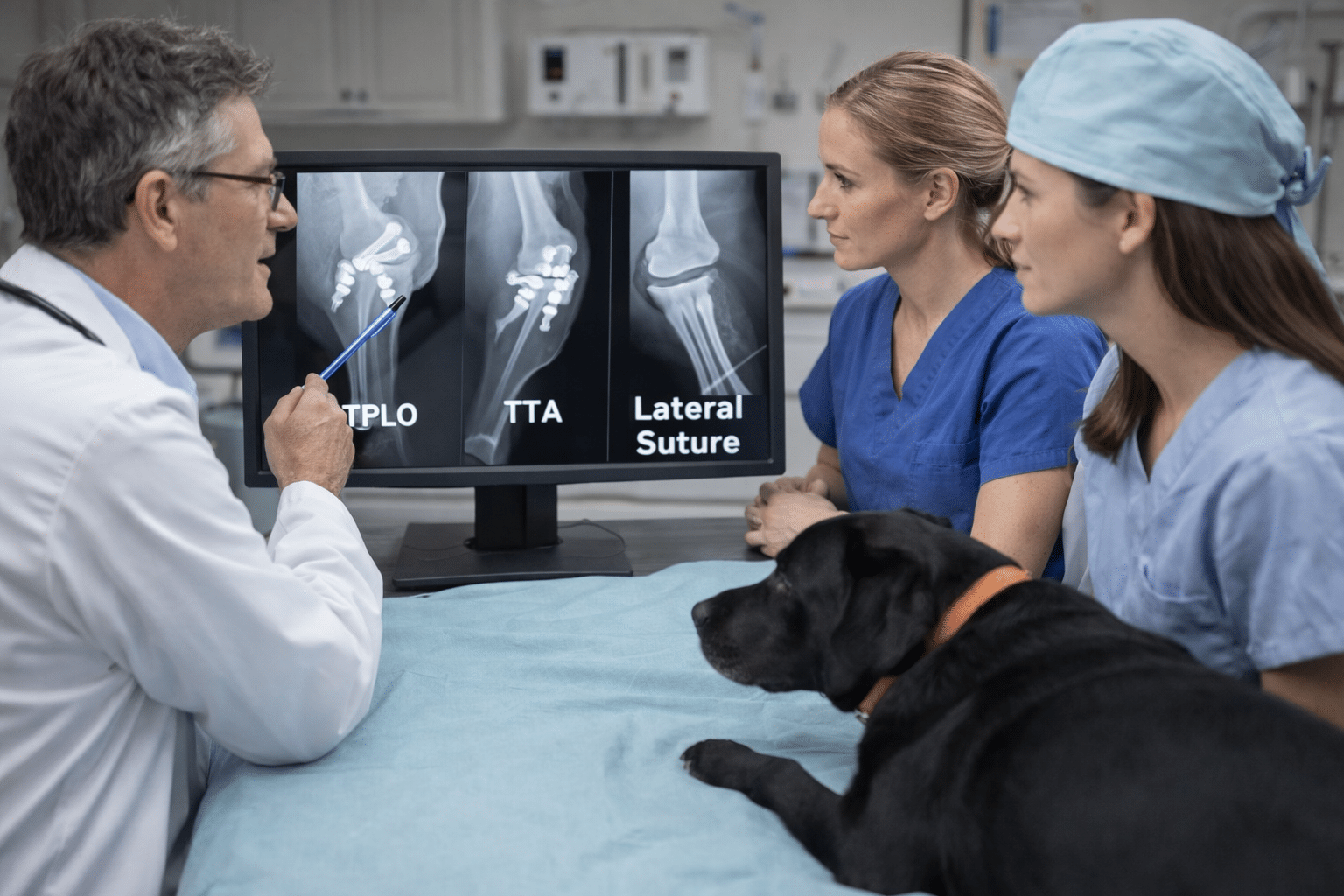
The Tightrope (TR) procedure is a highly advanced surgical technique developed to treat dogs with Cranial Cruciate Ligament (CCL) deficiency. The Tightrope procedure is an evolution of the older “lateral suture” techniques and does not involve cutting into the bone (such as TPLO or TTA). This state-of-the-art procedure uses high-strength modern materials to replicate the normal function of the CCL.
The Mechanics of the “Tightrope”
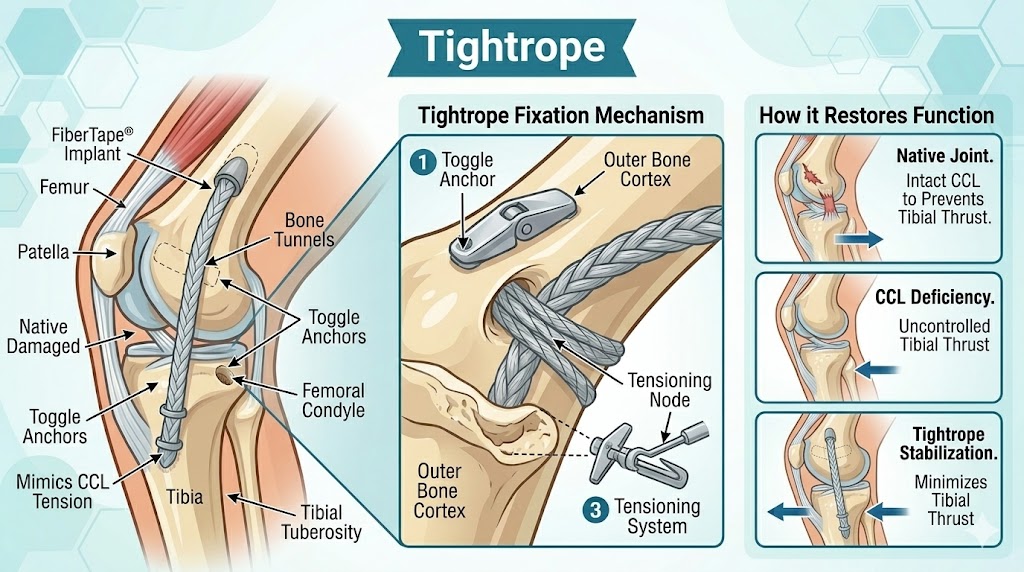
Specialized ultra-high-molecular-weight polyethylene is used in this procedure as a synthetic suture and is usually much stronger than the surgical ligaments before they are torn. This material is anchored through small tunnels drilled precisely into the femur and tibia; when the surgeon applies tension to this “tightrope” after anchoring the suture material around the joint, the surgeon can accomplish the following:
- Eliminate the “Tibial Thrust” – the painful and unnatural sliding motion created from a ruptured CCL.
- Restore Alignment – People will have their joints restored back into their natural tracking motion.
- Reduce Trauma – Since the technique does not require cutting of bone, it is considered to be for specific candidates a “gentle alternative” to traditional surgical repairs.
The Core Benefits of the Tightrope Procedure
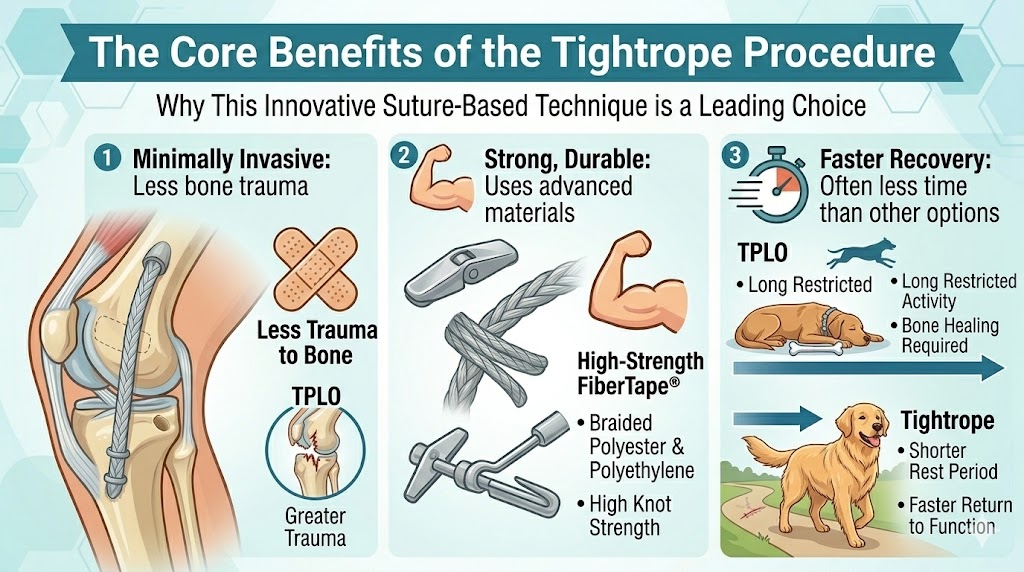
When determining a surgical procedure for your pet, you need to carefully evaluate the advantages of each. Tightrope surgery has become more common due to several unique features:
- No Major Bone Grafts or Significant Alterations to Bone: In comparison to other radical methods, there is less “hardware” in the leg following a tightrope surgery.
- Pets Can Begin Accepting Weight on Affected Limb Much More Quickly: Most pets will accept weight on their affected limb sooner compared to traditional bone cutting procedures.
- Smaller Incisions and Less Bone Interference: The reduced size of the incision and the minimal effect that the procedure has on bone will reduce the risk of post-operative complications.
- More Affordable Alternative to Traditional Procedures: Although this is still a high level orthopedic procedure, this method can sometimes be more accessible for families while providing an elite level of stability for their pet.
The Treatment Journey: What to Expect
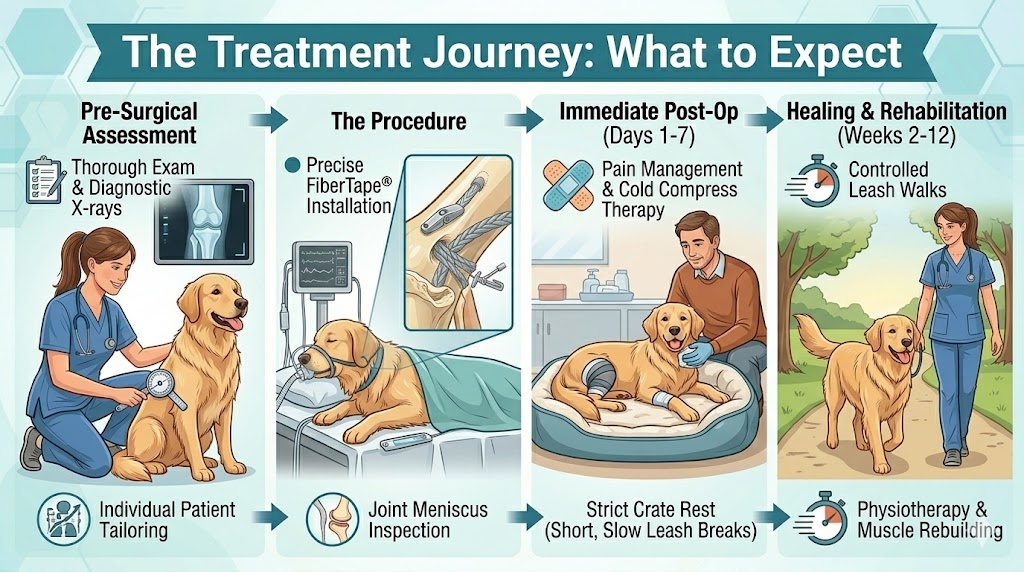
The entire treatment plan is carefully put together from when the limp is first observed to when the procedure takes place.
Pre-operative Evaluation
Every animal is different; therefore, before performing surgery, a veterinarian will perform a comprehensive orthopedic evaluation and take digital images of the bones. This helps determine if a Tightrope technique would be suitable based on the pet’s weight, size and level of activity, but generally speaking, this technique works well for animals in the small to medium sizes, although it has been successfully applied to larger breeds of dogs as well.
Description of the Procedure
During surgery the remaining portions of the torn CCL are removed and the meniscus is examined for any signs of tearing. The surgeon then uses specialized tools to drill out bone tunnels and secure the Tightrope device. The intent is to create a perfect “toggle” fit which will provide long-term stability to the dog’s leg for life.
The Healing Process: A Step-by-Step Guide
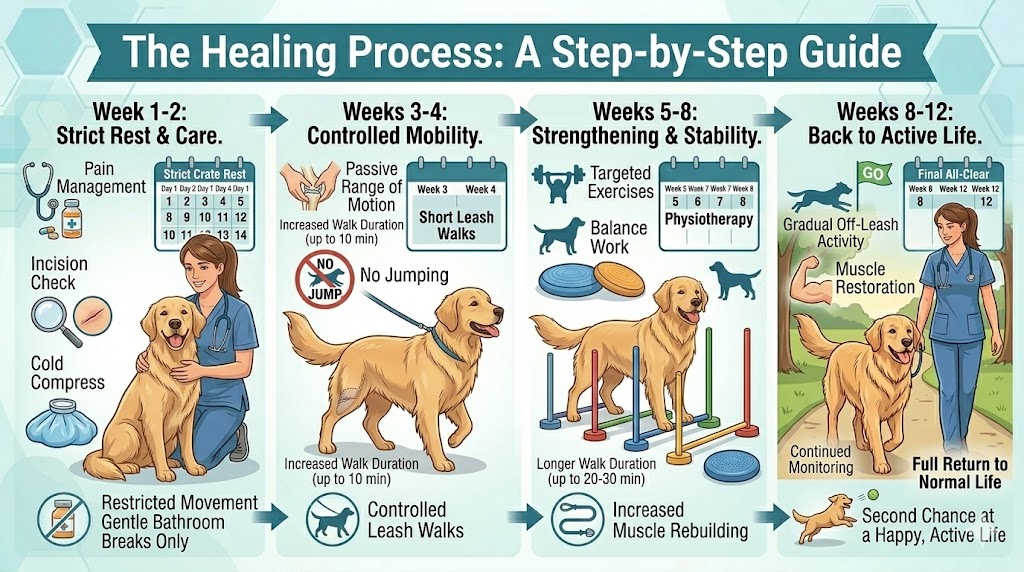
While surgery will resolve the mechanical problem, the true success of your pet’s surgery is in the healing phase. Recovery from surgery is a marathon not a sprint.
Weeks 1-2: Protection and Rest
During this phase of recovery, the focus is on managing your pet’s pain and healing the incision. Your pet will need strict crate rest. They should only be allowed to move for short, slow bathroom breaks on a lead. You will probably be managing swelling using medications given to you by your veterinarian and applying cold pack therapy.
Weeks 3-6: Introduction of Controlled Movement
While the swelling inside the leg decreases over this time, the synthetic ligament will start to be supported by your pet’s own fibrous (scar) tissue. This is a positive sign that the healing process is progressing well. At this time, we can begin to add in passive range of motion (moving the leg while lying down) to help prevent stiffness of the knee joint.
Weeks 8-12: Rebuilding Strength
By the end of two months (8 weeks) after surgery, most dogs and cats are comfortably walking. At this point, we will begin to gradually increase the amount of time on lead walks from 5 to up to 20 minutes. Rehabilitation exercises will also help rebuild muscle that was lost due to the injury, such as walking over small obstacles and sit-to-stand repetitions.
Success Stories: More Than Just a Joint
It’s not only about getting the hinge fixed; it’s also about getting a spirit back. So many times we see pets like Luna who used to hide and be scared of the pain, and then once she got her mobility back began to run in the grass with a wagging tail.
Once pets get back their mobility, they get their confidence back. They are no longer the “injured dog,” but they are the backyard protector or the pro napper on the couch. Being able to give a pet another chance at a happy, full-of-life experience is one of the reasons we use high-tech orthopedic equipment.
Why Professional Guidance Matters
Deciding which route will ensure that your pet’s knees stay healthy may be quite confusing due to the many contributing factors, including weight, age, tibial plateau angle, and activities. These all determine whether or not the Tightrope technique would serve to be the best option for your particular needs.
Having an experienced group of professionals help you decide what option is best for your pet will not only help you with making sure that you do not receive a “Band-Aid” solution to your pet’s knee problems but will also allow you and your family to receive a “comprehensive plan” concerning your pet’s care. Having a dedicated team of professionals working with you from pre-anesthesia (using state-of-the-art equipment to monitor all aspects of anesthesia) until completion of your dog’s final physical therapy will leave you with peace of mind.
Partnering for Your Pet’s Future
All Creatures Veterinary Center’s mission is to provide your pet with a joyful, pain-free life at every stage in their life; each step, every jump, and every wag. We can help you navigate through the intricacies of your pet’s orthopedic care with compassion and proficiency. If your pet has experienced a knee injury, let’s get them back on their feet together!
FAQs
Is Tightrope surgery better than TPLO?
There is no “one-size-fits-all” answer; your dog’s individual anatomy will determine which type of acl repairs should best suit them. TPLO (Tibial Plateau Leveling Osteotomy) requires cutting and rotating the bone; therefore, TPLO is usually recommended for larger, high-drive working dogs and/or those with steeply sloped tibiae. On the other hand, Tightrope is an excellent choice, as it is less invasive than TPLO because Tightrope does not involve cutting the bone (generally resulting in less post-op discomfort initially), as well as having a lesser incidence of developing certain types of problems that relate to the bones post-op. In addition, Tightrope offers superior stability while providing a significantly less invasive option and level of trauma than would occur by performing a bony surgery.
How long will my dog be “out of commission”?
Your animal must be kept in a crate or small gated space for the first 14 days. This is to allow your pet to heal well from their surgery. You will see some personality return between 21 and 42 days after the procedure; however, you are the “fun police” until this point! Almost all dogs will be back to normal by 12 weeks after their procedure.
What happens if the synthetic “Tightrope” breaks?
FiberTape® is a very strong material that was specifically designed to be used in human orthopedic surgery. Although no material can survive significant amounts of force (e.g., a dog jumping over a fence too soon), the purpose of the surgery is not only to provide a stable means by which the knee should remain sound indefinitely; the Tightrope serves as a bridge that provides a stable support to the joint while the body of the dog produces an internal bandage of scar tissue (fibrosis) that will stabilise the joint permanently.
Will my pet still develop arthritis?
Whenever a joint gets hurt there is always some chance of developing arthritis. However, Tightrope surgery greatly limits the “shearing” action caused by two bones moving against one another. By stabilizing your pet’s joint soon after an injury occurs, you can significantly delay the onset of arthritis thus providing more comfort to your pet for a longer period of time compared to not having surgery.