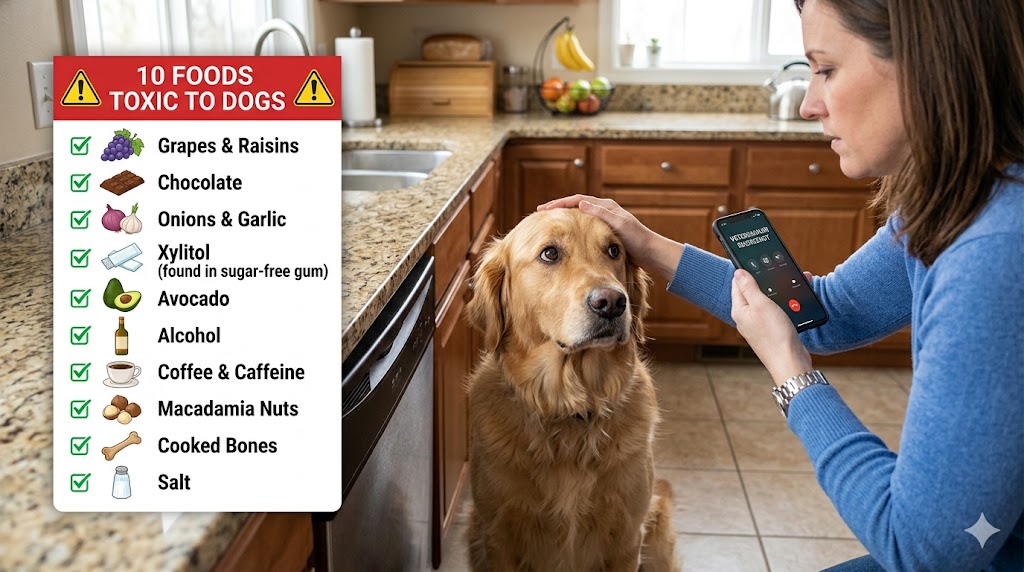
As a dog owner, you wish to share everything with your furry best friend, but some of your favourite foods may actually be dangerous to your dog, as dogs have different digestive systems than humans. Some of the foods you eat may be safe for you; however, they could be severely toxic — or even deadly — for your dog. Thousands of dogs end up at the vet every year because they have eaten something toxic to them, many times without the owner’s knowledge that the item is toxic. Everyday foods, such as chocolate and grapes, can result in serious health problems for your dog. To that end, this guide will list the 10 most toxic foods that your dog should never eat, along with the symptoms that you should look out for if your dog has eaten any of these foods, and at what time you should contact your veterinarian. Knowing this information could save your dog’s life.
The Toxic Foods to Avoid
1. Chocolate
Theobromine is toxic to dogs, and chocolate contains it. Dark chocolate is more dangerous than milk chocolate. A small amount can cause vomiting, diarrhea, and shaking, but a large quantity can cause seizures or death.
2. Grapes and Raisins
They may appear innocuous, but they are very poisonous to dogs. A small quantity (a few ounces) can lead to acute renal failure in dogs. Unfortunately, we still do not completely understand why this is happening. There is no safe level of garlic and shallots for dogs. You should avoid feeding these foods to your dog entirely.
3. Avocado
The avocado has persin that can damage your pet’s heart, lungs and digestive system. Guacamole can also pose a threat, especially when it includes onions/garlic.
4. Onions and Garlic
All forms of onion or garlic are harmful. They are toxic to canines because of the compounds contained in each and they have the unique ability to destroy a pet’s red blood cell ultimately leading to hemolytic anemia. All cooked, uncooked and powdered forms of both onions and garlic pose a potential for harm. Garlic powder, when used in seasoned foods, is also a toxin.
5. Xylitol (Sugar-Free Products)
This artificial sweetener is frequently found in sugarless gums, candies, and peanut butter. A small amount of consumption will cause a quick release of insulin, which can lead to an extreme drop in blood sugar (hypoglycemia) and can result in liver failure.
6. Macadamia Nuts
These nuts result in weakness, vomiting, tremors, and a rise in body temperature (hyperthermia) in dogs; this is especially dangerous because many pet owners do not know that these foods are poisonous to canines.
7. Alcohol
Any type of alcohol whether it be beer, wine, or liquor is extremely dangerous for dogs. Even small amounts of alcohol can produce intoxication, disorientation, and respiratory depression.
8. Caffeine
Coffee, tea, and energy drinks are all toxic for dogs. Caffeine has the potential to produce rapid heart rates, tremors, seizures, and even possibly cardiac arrest if at high levels.
9. Bones and Fatty Foods
Cooked bones can splinter and cause perforation of the digestive tract. Fatty foods can lead to a potentially fatal condition called pancreatitis.
10. Salt and Salty Snacks
High levels of salt can produce excessive thirst, dehydration, and sodium poisoning. Dogs should not be given salty snacks such as chips or popcorn.
When to Call the Vet

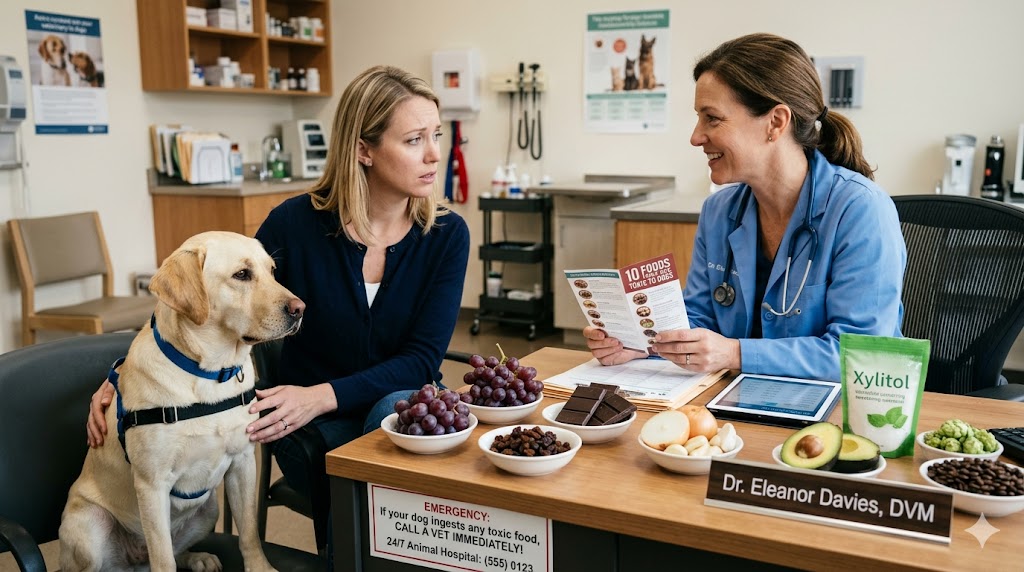
If your pet has consumed something they shouldn’t have, such as a poisonous food, and has the following signs: vomiting, diarrhea, lethargy, tremors, wheezing, weakness, seizures, or abdominal pain, do not hesitate to take them to the vet. Some poisons slowly develop symptoms over a period of days (like if you were to feed grapes to your dog then experience kidney failure 4-5 days later). Always follow up with your veterinarian or an animal poison control service for further information (along with the food’s tag name, quantity eaten, time eaten, etc.).
Prevention is Key
Keep toxic food out of the reach of children and pets – Store toxic food in secure containers; Store trash in a secure container; Educate family members about the type of foods that are poisonous to dogs; Supervise a dog’s behaviour around human food (especially during holidays when it is easier to obtain toxic food).
Conclusion
The health & safety of your dog must always be of the utmost concern. Understanding which foods may be harmful to your dog should be a part of being a responsible pet owner. If you believe that your dog has ingested something toxic to their health, never delay or hesitate to contact a veterinarian immediately! All Creatures Veterinary Center specializes in giving professional and emergency care as well as providing treatment for cases in which an animal has ingested a toxic product. The staff is experienced in treating emergencies and takes the proper measures quickly to ensure the safety of your dog. In all aspects of your dog’s welfare, it’s generally wise to err on the side of caution and seek immediate care.
FAQs
My dog ate a small piece of chocolate. Do I need to panic?
Take a deep breath! The amount of chocolate and what type will vary dramatically. A small portion of chocolate from an M&M may not be a danger to your pet, but if your dog has eaten dark chocolate in any amount, contact your veterinarian immediately to discuss it further. Dark chocolate contains a higher concentration of theobromine than milk chocolate. It is always better to call your veterinarian and ask than it is to worry yourself at home.
My dog got into the trash and ate something I can’t identify. What should I do?
Stressful situation; calm yourself down. Decide what your dog may have ingested, using the trash contents as a guide. Get in touch with your vet (or poison control) and have as much information about your dog ready (weight is vital for determining toxicity). Do not induce vomiting unless directed by a veterinarian or poison control.
How long after eating something toxic will my dog show symptoms?
The speed of onset of symptoms in your dog will vary according to the toxin that they have ingested as some poisons are very rapid acting (for example, xylitol) while others may take up 24-72 hours before the effects are evident (e.g., grapes and raisins can take that long to produce kidney failure). Thus, you need to monitor your dog carefully over the next several hours after having been accidentally poisoned even if they appear to be ok at that time.
My dog ate one grape. Is that enough to cause kidney failure?
There’s no way for us to know what amount causes toxicity because toxicity doesn’t follow a fixed rule – some dogs eat a very small number of grapes before they react while at the same time there are dogs that can eat grapes without incident. The safest way is to avoid giving your dog any grapes at all and to treat any incident seriously.