The first night after surgery is often the hardest on pet parents. You bring your dog home, they are sleepy or restless, and every glance at the incision can make you wonder if it looks normal. Knowing how to care for dog stitches can make those first few days less stressful and help your dog heal more comfortably and safely.
Most dogs recover well with a clean environment, good activity control, and close observation. The challenge is that even a well-done surgical repair can be set back quickly by licking, jumping, rough play, or moisture around the incision. A little extra caution at home goes a long way.
How to care for dog stitches at home
Your biggest job is protecting the incision while your dog’s body does the healing. In most cases, stitches need time, dryness, and minimal disturbance. That sounds simple, but dogs are talented at finding ways to scratch, lick, rub against furniture, or bolt across the yard at the worst possible moment.
Keep the incision clean and dry unless your veterinarian gave you different instructions. That usually means no bathing, no swimming, and no wiping the area with peroxide, alcohol, or over-the-counter creams. Many well-meaning home treatments actually irritate healing tissue and can delay recovery.
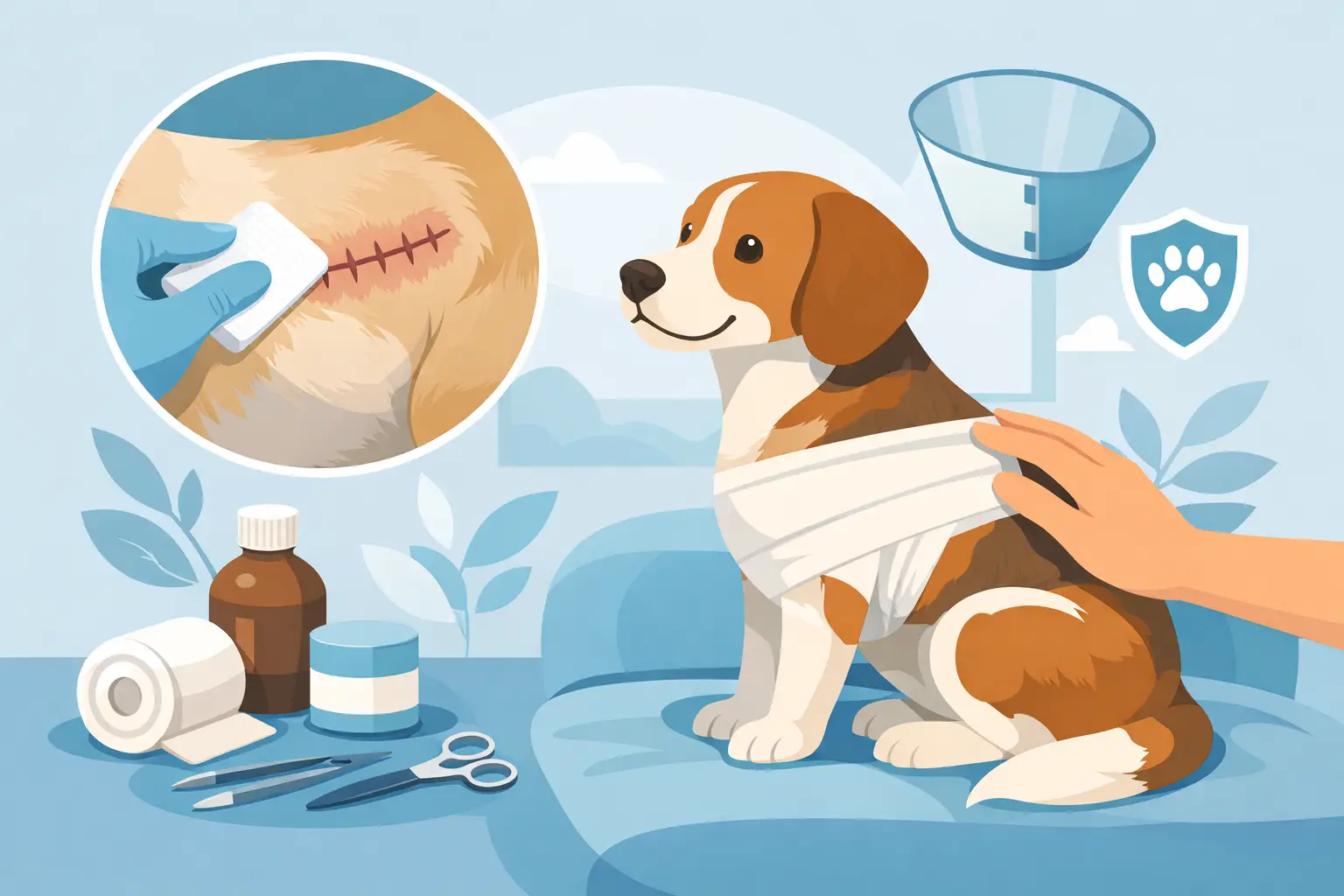
Your dog should also wear the recommended protective collar or recovery garment exactly as directed. If your dog can reach the stitches, they can damage them in minutes. Licking may seem harmless at first, but it adds moisture, bacteria, and repeated trauma to delicate tissue.
Activity restriction matters just as much as incision care. Short leash walks for bathroom breaks are usually fine if your veterinarian approves, but running, jumping on furniture, wrestling with other pets, and off-leash play should wait. Internal healing often takes longer than the skin suggests, especially after spay and neuter procedures, mass removals, orthopedic surgery, or deeper soft tissue procedures.
What normal dog stitches look like
A healing incision is not always pretty on day one. Mild redness at the edges, slight swelling, and a small amount of clear or faintly pink drainage can be normal early on. Some bruising may also appear, especially in lighter-skinned dogs or after more involved surgery.
What you want to see over time is gradual improvement. The edges should stay closed, swelling should not keep increasing, and the area should not become wetter, hotter, or more painful each day. Your dog may be a little tender, but they should not seem intensely distressed when you are near the incision.
If your dog has external stitches or staples, avoid touching them unless you were specifically told to clean the area. Looking once or twice a day is usually enough. Constant checking can turn into accidental poking and unnecessary worry.
Changes that should prompt a call
Some signs deserve prompt veterinary attention. Call your veterinarian if you notice bleeding that does not stop, yellow or green discharge, a foul odor, skin edges pulling apart, marked swelling, worsening redness, or missing stitches. Also call if your dog is suddenly very lethargic, will not eat, seems painful despite medication, vomits repeatedly, or develops diarrhea after surgery.
It also matters where the stitches are. A small amount of swelling on an abdominal incision may be monitored differently than swelling near an eye, paw, or joint. If you are unsure, it is always better to ask. A quick recheck can prevent a larger problem.
Prevent licking and chewing before it starts
The most common reason dog stitches get irritated is self-trauma. Dogs lick because the area feels strange, itchy, or painful. They may also chew at bandages or try to scratch with a back foot. Once that habit starts, the incision can deteriorate quickly.
An e-collar is often the safest option, even if your dog dislikes it. Inflatable collars and soft recovery cones can work for some dogs, but they are not foolproof for every body shape or incision location. Recovery suits can help too, particularly for abdominal procedures, but they need to fit correctly and stay clean and dry.
If your dog becomes anxious while wearing a cone, talk with your veterinary team rather than removing it. Sometimes a different size, style, or medication adjustment makes a big difference. The goal is not just comfort. It is protecting the repair long enough for healing to stay on track.
Keep your dog comfortable without overdoing activity
Pain control supports healing. When dogs hurt, they are more likely to pant, pace, avoid rest, or lick at their stitches. Give all prescribed medications exactly as directed, and never substitute human pain medicine. Many common human medications are dangerous for dogs, even in small amounts.
At the same time, feeling a little better can make some dogs too active. This is where pet parents get mixed signals. A dog may seem bright and eager to move around before the incision is truly secure. Feeling better does not mean the healing period is over.
Set up a calm recovery space with soft bedding, easy footing, and limited opportunities to jump. If you have a multi-level home, it may help to keep your dog on one floor for several days. If they are crate trained and comfortable in a crate, that can make rest easier. For other dogs, a small gated area may be the better choice.
Feeding, hydration, and bathroom habits
After anesthesia or surgery, appetite may be slightly reduced for a day. Offer water and small meals as instructed. If your dog refuses food entirely, vomits more than once, or seems unable to keep water down, contact your veterinarian.
Bathroom habits can also shift briefly. Mild constipation or softer stool can happen after stress, medication, or reduced activity. Still, straining, repeated vomiting, bloating, or no urination should not be ignored. Recovery includes the whole patient, not just the stitches.
When cleaning is needed and when it is not
Many incisions should be left alone unless they become soiled. If your veterinarian told you to clean the area, follow those directions closely. Usually that means using only the prescribed or recommended solution and gently blotting rather than scrubbing.
If dirt gets on the incision after a potty break, call before trying home remedies. Southern California weather often means dry yards, dust, and active dogs, so it is understandable to want to tidy things up. But harsh cleaning can do more damage than the dirt itself.
Bandages are different from open incisions with visible stitches. If your dog has a bandage, keep it dry and monitor for slipping, swelling above or below the wrap, odor, or chewing. A wet bandage should be changed promptly because trapped moisture can cause skin problems fast.
Follow-up visits matter more than they seem
Even when healing looks straightforward, recheck appointments are important. Some problems are easier for a veterinary team to spot than for an owner to catch at home. Internal sutures, tissue swelling, and subtle infection can develop before obvious external changes appear.
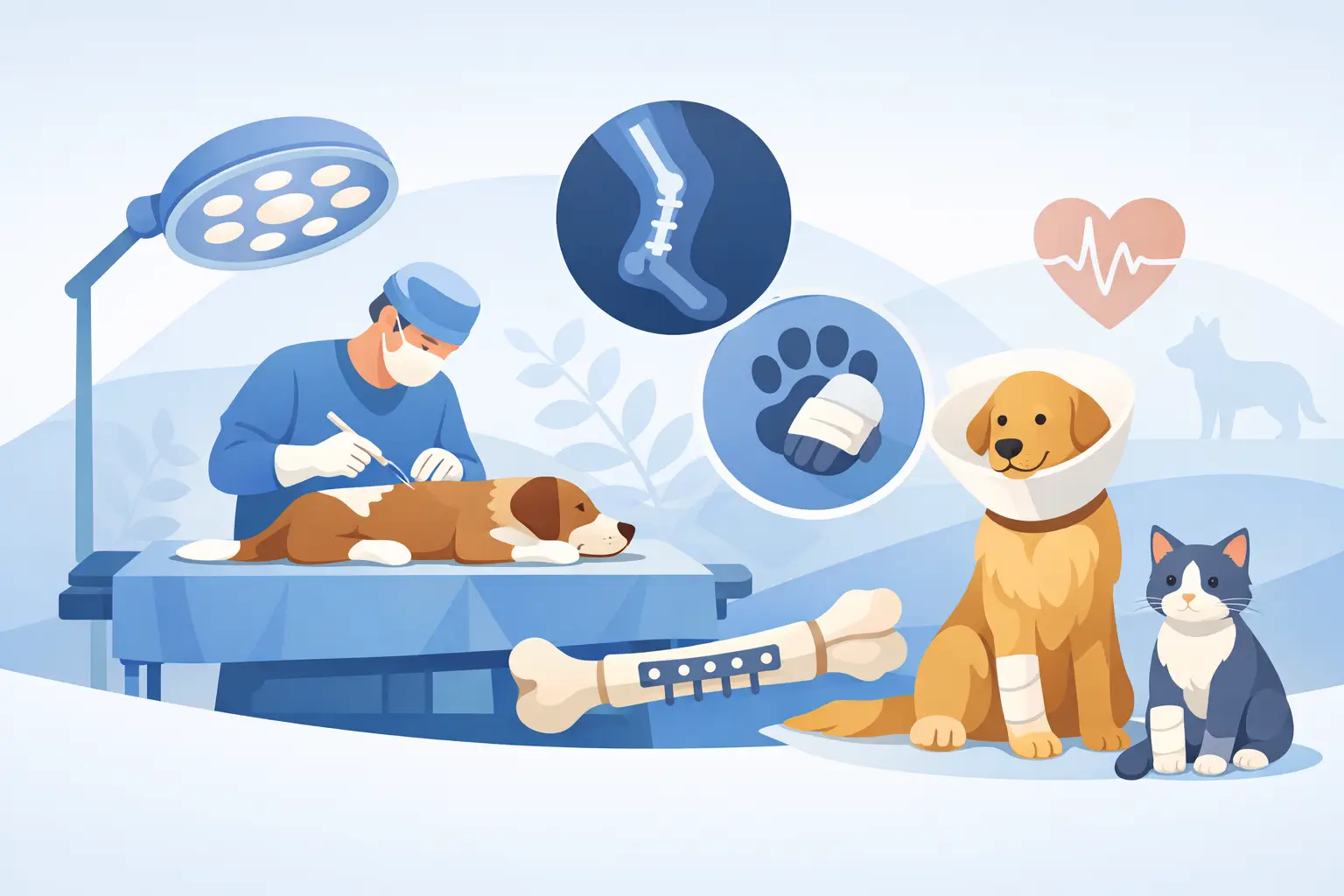
If your dog had advanced surgery, trauma repair, or a procedure involving joints or deeper structures, follow-up care is especially valuable. Stitches may be only one part of the recovery plan. Medication adjustments, rehabilitation guidance, and progress checks can all shape the outcome.
This is where having a full-service hospital can help. When your dog’s preventive care, surgery, imaging, and follow-up support are coordinated, decisions tend to be clearer and recovery feels less fragmented for families.
Care for dog stitches after common procedures
Not all incisions heal on the same timeline. A routine spay or neuter may involve a shorter recovery than orthopedic surgery, a large mass removal, or a wound repair after an accident. The location of the stitches matters too. Paw and leg incisions are harder to protect because they move constantly and are more exposed to dirt and moisture.
Dogs with skin folds, allergies, or a history of licking may need extra supervision. Senior dogs and dogs with certain medical conditions may also heal more slowly. That does not always mean something is wrong. It means the aftercare plan may need to be more tailored.
If anything feels off during recovery, trust that instinct and check in. At All Creatures Veterinary Center, we would always rather answer a question early than treat a preventable setback later.
Healing is rarely about doing one big thing right. It is usually the result of several small, steady choices – keeping the incision dry, sticking with the cone, giving medications on time, and asking for help when something changes. That kind of attentive care is what helps stitches do their job and lets your dog get back to normal safely.