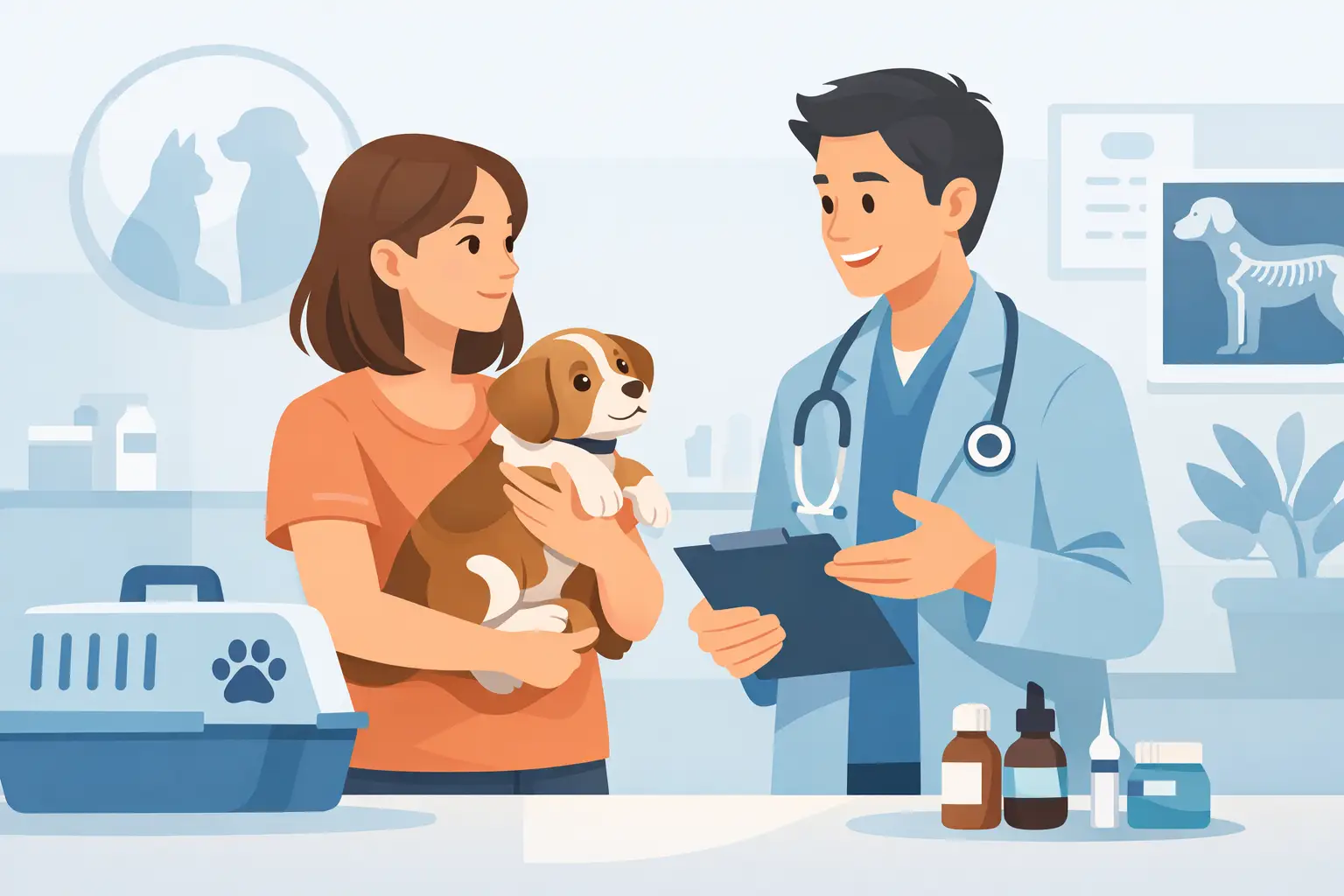
The first few days with a puppy are a mix of excitement, lost sleep, and a lot of questions. Your new puppy first vet visit is one of the most important early steps because it helps confirm your puppy is healthy, catches hidden issues early, and gives you a clear plan for vaccines, parasite prevention, nutrition, and growth.
For many families, this appointment is also where the nervousness starts. Is your puppy eating enough? Are soft stools normal? When do vaccines begin? Should they be meeting other dogs yet? A good first visit should leave you with real answers, not more guesswork.
Why the new puppy first vet visit matters
Even puppies that seem perfectly healthy can have concerns that are easy to miss at home. Intestinal parasites, ear infections, skin issues, congenital concerns, and early signs of illness do not always show up in obvious ways. A veterinarian can evaluate your puppy from nose to tail and spot problems before they become bigger or more expensive to treat.
This visit also sets the tone for lifelong care. Instead of handling vaccines at one location, a sick visit somewhere else, and diagnostics somewhere else again, many pet owners prefer to establish care with a hospital that can support routine wellness visits as well as urgent or more advanced needs over time. That kind of continuity matters, especially in the first year when puppies change quickly.
When to schedule your puppy’s first appointment
In most cases, a puppy should see a veterinarian within a few days of coming home, even if the breeder, rescue, or shelter already provided initial care. If your puppy has coughing, vomiting, diarrhea, poor appetite, low energy, or anything else that worries you, schedule sooner.
Timing matters because vaccine schedules are age-based and need to stay on track. The same goes for deworming and fecal testing. If you wait too long, it becomes harder to know what your puppy has already received, what still needs to be done, and when your puppy can safely start broader social experiences.
If you were given records, bring them. If the information is incomplete, your veterinary team can help sort out the most sensible next steps.
What to bring to the new puppy first vet visit
A little preparation makes the appointment smoother. Bring any paperwork from the breeder, rescue, or shelter, including vaccine dates, deworming history, microchip information, and any lab results. If your puppy is eating a specific food, take a photo of the label or bring the bag details so your veterinarian can review the formula.
It is also helpful to bring a fresh stool sample if possible. Parasites are common in puppies, and a fecal test can identify issues that may not be visible to the eye. Keep the sample sealed and bring it the same day.
For safety, transport your puppy in a secure carrier or on a well-fitted leash and harness. Young puppies are still building confidence, so a calm arrival can make a real difference.
What happens during the exam
The first appointment is usually more thorough than many owners expect, and that is a good thing. Your veterinarian will review your puppy’s history, ask about eating, drinking, bathroom habits, sleep, behavior, and any symptoms you have noticed at home. No detail is too small here. A change in stool, mild scratching, or occasional sneezing may help complete the bigger picture.
The physical exam often includes checking weight, body condition, temperature, heart and lungs, eyes, ears, teeth, skin, coat, abdomen, joints, and overall development. Your veterinarian may also check for hernias, retained baby teeth later on, signs of congenital concerns, and evidence of fleas, mites, or skin infection.
If your puppy is nervous, the team should move at a pace that keeps the experience as low-stress as possible. That matters because early veterinary visits help shape how your dog feels about future care.
Vaccines, deworming, and parasite prevention
This is the part many new owners expect, but it is not one-size-fits-all. Vaccine recommendations depend on your puppy’s age, previous medical history, health status, and lifestyle risks. Core vaccines are generally started early and given in a series because maternal antibodies can interfere with full protection if vaccines are given only once.
Your veterinarian will explain what your puppy has already received, what is due now, and when boosters should be scheduled. They may also recommend non-core vaccines depending on exposure risk, boarding plans, travel, daycare, or local disease patterns.
Deworming is common even when a puppy seems healthy. Puppies frequently carry intestinal parasites, and some can affect people as well. Flea, tick, and heartworm prevention are also worth discussing early. Southern California’s climate can allow parasites to remain a year-round issue, so prevention often makes more sense than waiting for a problem to appear.
Feeding, growth, and behavior questions
One of the best parts of a puppy visit is getting guidance tailored to your dog, not generic advice from the internet. Your veterinarian can help you choose an appropriate puppy diet, portion size, feeding schedule, and expected growth pattern based on breed, age, and body condition.
This is also the right time to ask about teething, house-training, crate training, chewing, nipping, and normal puppy energy. Some behaviors are typical and improve with structure and consistency. Others may need more active intervention before they become habits.
Socialization is another area where timing matters. Puppies need positive exposure to people, sounds, handling, and new environments during a key developmental window. At the same time, they are not fully protected from contagious disease until their vaccine series is complete. Your veterinarian can help you balance both realities so you can build confidence without unnecessary risk.
Questions worth asking at the first visit
You do not need to arrive with a perfect list, but it helps to cover the basics. Ask what vaccine schedule your puppy needs, when to spay or neuter based on breed and lifestyle, what parasite prevention is recommended, and what signs would justify an urgent visit.
It is also smart to ask about normal versus abnormal stool, how much sleep a puppy should get, what your puppy’s adult size may be, and when dental care should start to become part of the conversation. If you have insurance or want to compare wellness costs over the first year, ask about expected timing for routine care so there are fewer surprises.
Transparent conversations early on can save stress later. Good veterinary care is not just about treatment. It is about helping families make informed decisions before something becomes urgent.
If your puppy seems healthy, do you still need to go?
Yes. A healthy-looking puppy can still have parasites, heart murmurs, developmental abnormalities, ear infections, or nutritional issues that are not obvious at home. The first exam is partly about finding problems, but it is just as much about establishing a baseline while your puppy is well.
That baseline becomes useful later. If your dog develops allergies, digestive issues, limping, or behavior changes as they grow, your veterinarian already knows their early history and can compare what is new versus what has always been there.
Building a long-term care plan
The first year moves fast. After the new puppy first vet visit, most puppies need a series of follow-up appointments for vaccines, growth checks, parasite control, and ongoing guidance. Some will also need diagnostic testing, treatment for minor illness, dental monitoring, or discussions about orthopedic development depending on breed and activity level.
This is where having a veterinary team that can provide preventive care, diagnostics, imaging, surgery, and rehabilitation under one roof can make life simpler for busy families. At All Creatures Veterinary Center, that continuity helps pet owners in Newhall, Santa Clarita, and nearby communities feel supported from the first puppy exam through every stage that follows.
If you are bringing home a puppy soon, do not wait for a problem to schedule care. A calm, thorough first visit can give you something every new pet parent wants more of – confidence.