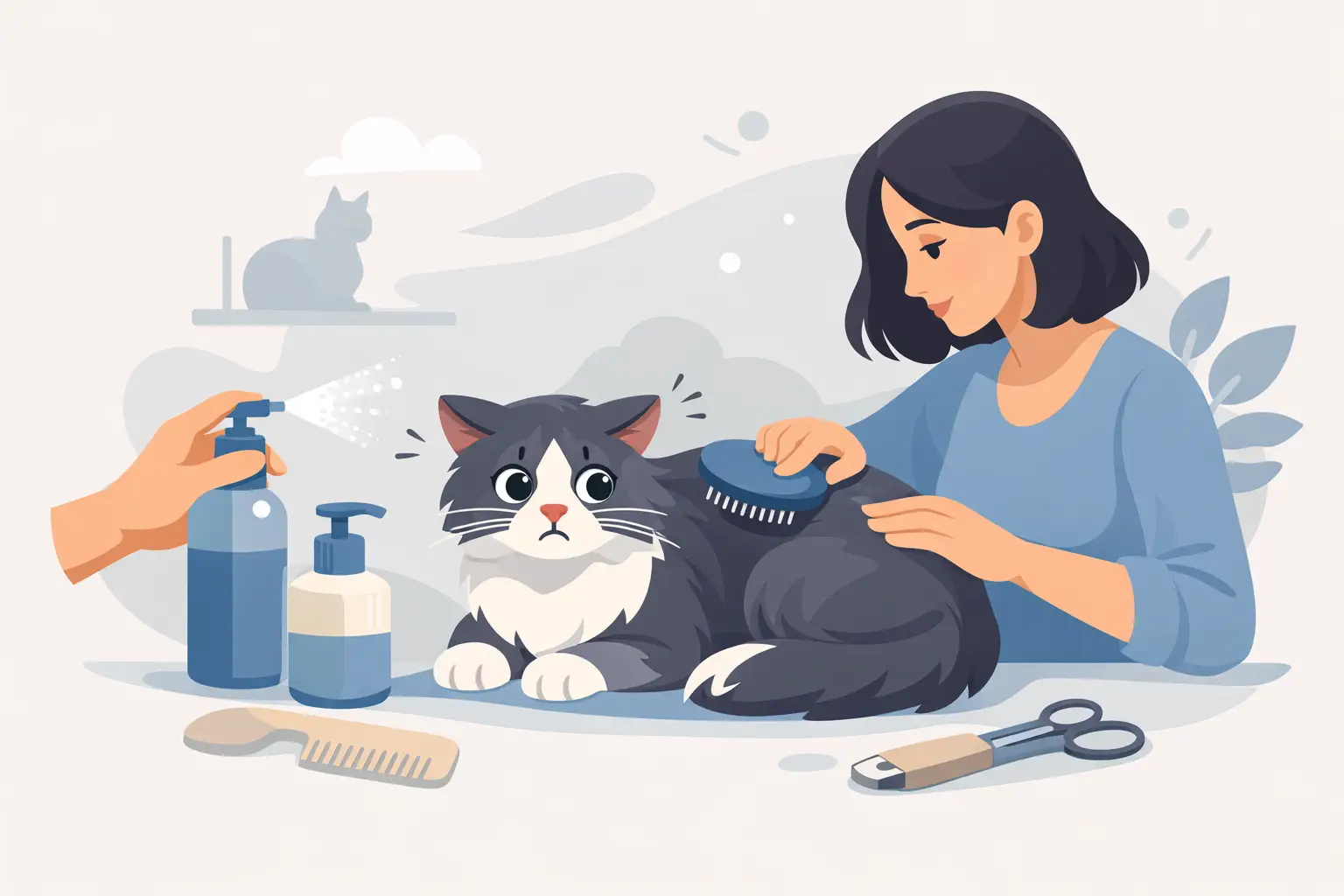
If brushing your cat turns into hiding, hissing, or a full-speed escape under the bed, you are not alone. Many families need help anxious cat grooming because cats are sensitive to handling, sound, restraint, and unfamiliar routines. The good news is that grooming does not have to become a battle, and forcing it usually makes the next attempt harder.
Why grooming can feel so stressful to cats
Cats are wired for control. They like predictable movement, familiar scents, and the freedom to walk away when something feels wrong. Grooming can disrupt all of that at once. A brush may pull at a tangle, nail trims require paw handling, and clippers or dryers add noise and vibration that can feel threatening.
Sometimes anxiety is mostly behavioral. A cat may have had a bad experience in the past, may dislike being restrained, or may simply have a low tolerance for touch in certain areas. In other cases, fear during grooming is a clue that something physical is going on. Arthritis, dental pain, skin irritation, ear infections, obesity, and matted fur can all make normal grooming feel uncomfortable.
That is why a cat who suddenly resists brushing or starts lashing out during routine care deserves a closer look. What seems like attitude can actually be pain.
Help anxious cat grooming starts with the environment
Before you pick up a brush, set the stage. Cats do better when grooming happens in a quiet room without extra people, barking dogs, or sudden activity. Choose a time when your cat is naturally calmer, such as after a meal or nap, rather than during an active play period.
Keep sessions short at first. For many anxious cats, one or two minutes is enough. That may not feel productive to you, but it is productive if it ends without panic. The goal early on is not a perfect coat or fully trimmed nails. The goal is teaching your cat that grooming does not always lead to stress.
It also helps to gather everything in advance so you are not stopping and starting. When a session drags on because you are hunting for nail clippers or a towel, your cat has more time to become uneasy.
Start with tolerance, not technique
A common mistake is jumping straight into the task. An anxious cat often needs to rebuild trust around touch before you can realistically brush a coat or trim nails.
Begin by gently handling the area you eventually want to groom. Touch your cat’s shoulder, reward, and stop. On another try, briefly touch a paw, reward, and stop. If your cat stiffens, flicks the tail hard, flattens the ears, growls, or turns to swat, that is your signal that you have gone too far too fast.
This kind of gradual desensitization works best in tiny steps. You might spend several days just letting your cat sniff the brush and earn a treat. Then you might do one light stroke on an easy area like the back or cheeks. Sensitive spots like the belly, hindquarters, and mats usually need more time.
When families ask how to help anxious cat grooming go more smoothly, this is often the turning point. Progress comes from repetition and calm endings, not from getting everything done in one sitting.
Use the right tools for your cat’s coat and comfort
Not every brush feels the same to a cat. A soft slicker, grooming glove, metal comb, or rubber brush may work beautifully for one cat and be rejected by another. Long-haired cats may need a comb that reaches through the coat, while short-haired cats often tolerate softer tools better.
The wrong tool can tug at the skin and create instant resistance. If your cat seems more upset when you reach a certain spot, do not assume it is pure anxiety. There may be a mat, tender skin, or an area that needs veterinary attention.
Nail care is similar. Sharp, cat-specific trimmers are usually easier and safer than dull tools that crush rather than cut. If your cat panics when the paw is extended, practice touching and holding the paw without trimming for several sessions first.
Bathing is where many owners run into trouble. Most cats do not need regular baths unless they have gotten into something, have a medical skin condition, or cannot keep themselves clean. If bathing is necessary, a calm setup matters more than speed. Warm water, non-slip footing, and quiet handling make a difference, but some cats are simply too fearful to bathe safely at home.
Know when to stop
Stopping early is not giving up. It is prevention.
A cat who is mildly uncomfortable may lick the lips, tense the body, swish the tail, or try to sidestep the brush. A cat who is nearing the limit may crouch, vocalize, pin the ears back, or whip around to bite. If you keep going after those warnings, the next level may be scratching, full panic, or fear that carries over into future care.
Try ending on a small success. One nail trimmed, a few strokes of the brush, or a brief wipe around the face may be enough for that day. This is especially true for kittens, senior cats, rescues, and cats with a history of handling sensitivity.
There is a practical trade-off here. Short sessions mean it can take longer to finish the job, especially with a thick coat or several mats. But trying to do everything at once often leads to setbacks that cost more time overall.
When grooming problems are really medical problems
Cats are excellent at masking discomfort. A coat that is becoming greasy, flaky, matted, or unkempt can point to more than grooming avoidance. Cats with obesity or arthritis may have trouble reaching their back end. Cats with dental disease may stop grooming because they feel pain when moving the mouth or jaw. Skin infections, allergies, parasites, and ear disease can all make touch unpleasant.
If your cat has sudden behavior changes, new mats, dandruff, overgrooming, hair loss, a bad odor, redness, scabs, or pain with handling, it is time for a veterinary exam. The same is true if grooming attempts consistently end with aggression. Safety matters for both you and your cat.
At a full-service hospital like All Creatures Veterinary Center, that evaluation can be part of a broader care plan. Sometimes the answer is simple coat maintenance advice. Other times, diagnostics, pain management, skin treatment, or sedation planning may be the safest path.
Professional help for anxious cat grooming
There are times when home grooming is realistic, and there are times when professional support is the kindest option. Severe matting, skin disease, obesity, mobility issues, and extreme fear can all make at-home care difficult or unsafe.
This is where it helps to work with a veterinary team rather than treating grooming as a cosmetic issue only. In an anxious cat, grooming and health are often connected. If a cat needs mats removed, a sanitary trim, nail care, or support for stress-related behavior, a medical setting offers an added layer of safety. Your veterinarian can identify pain, check for infections or parasites, and recommend whether calming strategies, medication, or supervised grooming are appropriate.
It depends on the cat. Some only need slower handling and better tools. Some need regular professional grooming on a schedule before mats become painful. Some do best with a combined plan that includes home practice, veterinary guidance, and occasional in-hospital support.
What helps between grooming sessions
Daily life can make grooming easier or harder. Cats who have good traction, accessible litter boxes, healthy body weight, and pain that is well managed generally tolerate handling better. Regular brushing before tangles form is also much easier than trying to work through a coat that has already become knotted.
You can also build positive associations away from grooming time. Brief calm handling, treat-based training, and rewarding your cat for staying on a towel or countertop can improve cooperation over time. It sounds small, but these low-pressure moments often create the trust you need later.
If your cat has long hair or a history of mats, consistency matters. Waiting until the coat is in rough shape usually means the session will be uncomfortable, which reinforces the anxiety you were trying to avoid.
When to call your veterinarian
If your cat is matted, painful, aggressive during grooming, or suddenly unable to keep up with normal coat care, do not try to push through at home. Cats can be injured by struggling during nail trims, bathing, or mat removal, and owners can be injured too. A veterinarian can help determine whether the issue is fear, pain, or both, and recommend the safest next step.
A calm grooming routine is possible for many cats, but it rarely starts with force. It starts with listening to what your cat’s behavior is telling you and getting help when grooming has become more than a simple at-home task.